When planning a concrete project, the method of placement matters just as much as the mix itself. Many homeowners compare concrete pump hire in the UK, a direct concrete pour, and other concrete placement methods before work begins. While both options use quality pumped concrete or ready-mixed supply, the way concrete reaches the ground affects speed, access, and overall construction efficiency.
At first, the difference may seem small. However, once work starts, the choice becomes clear. Some projects suit a traditional pour. Others benefit from pumping equipment. Therefore, understanding each method helps you avoid delays and manage your budget more effectively.
This guide explains both approaches in simple terms. As a result, you can decide which option fits your site, timeline, and goals.
What Is A Direct Concrete Pour And When Is It Used?
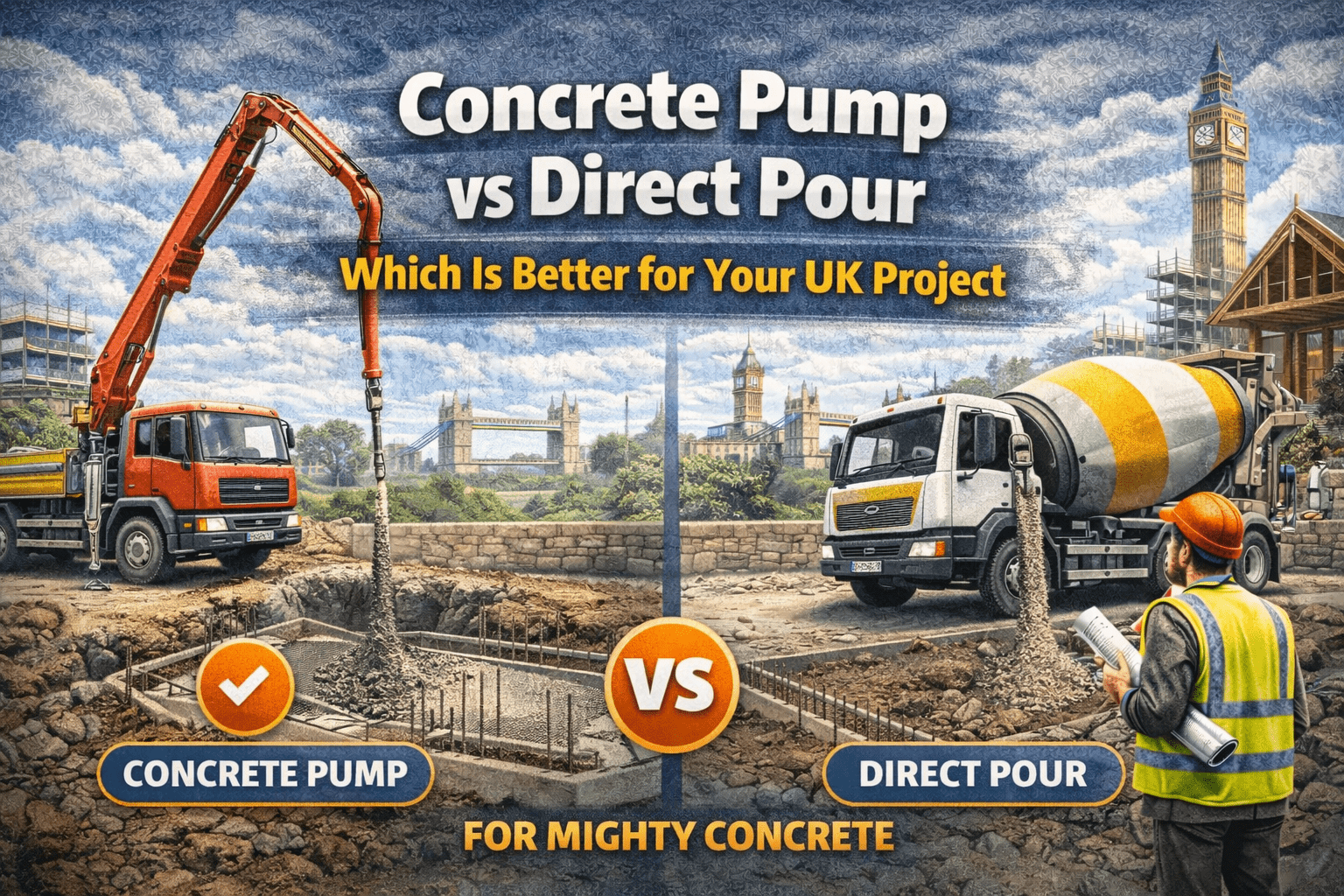
A direct concrete pour is the traditional method of placing concrete. In this process, concrete flows from the delivery truck chute onto the prepared area. Workers then move and level the mix using tools and manual labour.
This method works well for open and accessible sites. For example, small patios, shed bases, and short driveways often suit this approach. Since no pumping equipment is required, the setup is straightforward.
However, direct pouring has limits. If access is narrow or the pour point sits far from the road, manual movement becomes slower. In addition, wet or uneven ground can reduce safety and accuracy.
A direct pour is usually suitable when:
- The site is close to the road
- The ground is level and stable
- The area is small or easy to reach
- Labour access is clear
Although the method is simple, planning still matters. Therefore, access and layout should always be reviewed before delivery.
What Is Pumped Concrete And How Does It Work?
Pumped concrete uses a mechanical pump to move concrete from the truck to the placement area through a hose or pipe. Instead of relying on wheelbarrows, the mix travels directly to the required location.
As a result, this method allows precise placement over longer distances or around obstacles. It also improves control on complex sites.
When arranging concrete pump hire in the UK, the equipment is positioned safely, and the hose is guided to the pour area. The concrete then flows steadily and consistently.
Pumping is often chosen when:
- Access routes are narrow
- The pour point sits behind a property
- The site includes slopes or steps
- A larger volume must be placed quickly
While pumping involves additional equipment, it can improve construction efficiency. Since the concrete moves directly to the target area, labour effort is reduced, and placement becomes faster.
Concrete Placement Methods Compared: Speed, Access And Efficiency
Different concrete placement methods serve different needs. Therefore, comparing them clearly helps avoid costly mistakes.
Direct pouring relies on manual movement after delivery. Pumped placement transfers the mix immediately to the final position.
Key differences include:
- Direct pouring suits open and short-distance work
- Pumped systems handle restricted or distant areas
- Manual methods require more labour time
- Pumping supports quicker flow on larger pours
In smaller projects, a direct concrete pour may feel practical. However, in tight or complex spaces, pumped concrete can reduce disruption.
Since each site is different, reviewing the layout and access first ensures the best decision.
Which Option Is More Cost-Effective For Domestic Projects?
Cost is often the deciding factor. However, price alone does not show the full picture.
A direct concrete pour may appear cheaper at first. Since no pump is hired, equipment costs remain lower. For small and open spaces, this option can be practical.
However, labour time must also be considered. If workers spend extra hours moving concrete manually, overall expenses increase. In addition, slower placement may affect finishing quality.
On the other hand, concrete pump hire in the UK adds equipment cost. Yet, pumping reduces labour strain and shortens placement time. Therefore, larger or harder-to-reach sites often benefit from improved construction efficiency.
In many domestic projects, the most cost-effective solution depends on:
- Site access
- Volume of concrete required
- Distance from the road to the pour area
- Time available for completion
A balanced review prevents unexpected overspending.
Site Conditions In Guildford, Harrow And Nearby Areas
Local ground conditions influence placement decisions. For example, properties in Guildford and Henley-on-Thames may include sloped gardens or limited driveway space. Similarly, homes in Harrow and Hemel Hempstead often face access restrictions.
In such areas, moving concrete manually across uneven paths can slow progress. Therefore, pumped concrete may improve workflow where access is narrow or elevation changes are involved.
Across High Wycombe and Langley, many residential projects include extensions at the rear of properties. In these cases, concrete placement methods must adapt to restricted entry points.
A local supplier serving Guildford, Harrow, Hemel Hempstead, Henley on Thames, High Wycombe, and Langley understands these conditions. Once site layout is assessed, the right approach becomes clearer.
Mighty Concrete operates across these areas and supports domestic builds with both direct pours and pumped options. This allows homeowners to choose a placement method that suits their property rather than forcing a single solution.
How Mighty Concrete Helps You Choose The Right Method
Selecting between a direct concrete pour and pumped concrete requires practical advice. Therefore, guidance before booking delivery makes a difference.
Mighty Concrete provides same-day and next-day delivery services across Guildford, Harrow, Hemel Hempstead, Henley on Thames, High Wycombe, Langley, and nearby areas. Since local teams understand site constraints, placement planning becomes simpler.
Support includes:
- Reviewing access routes before delivery
- Advising whether concrete pump hire in the UK is necessary
- Coordinating pump timing with ready-mixed supply
- Ensuring steady placement for improved construction efficiency
By assessing project size and layout in advance, delays and confusion are reduced.
Choose The Right Placement Method For Smoother Results
Every UK project is different. Therefore, choosing between a direct concrete pour and pumped concrete should depend on access, scale, and timing rather than habit. While direct pouring suits smaller, open sites, concrete pump hire in the UK often improves construction efficiency where space is restricted or distance is greater. Selecting the correct concrete placement method reduces labour strain, improves accuracy, and keeps schedules steady.
For clear advice and reliable supply across Guildford, Harrow, Hemel Hempstead, Henley on Thames, High Wycombe, and Langley, contact Mighty Concrete on 01753 900066 or message the team via WhatsApp to plan your delivery with confidence.
FAQs
- Is Pumped Concrete Always Better Than A Direct Concrete Pour?
Not always. Pumping suits restricted or larger sites, while direct pouring works well for small and accessible areas. - When Should I Consider Concrete Pump Hire In The UK?
You should consider pumping when access is limited, the distance is long, or faster placement improves construction efficiency. - Does Pumped Concrete Improve Project Speed?
Yes. Since the mix moves directly to the target area, placement time is often reduced. - Which Concrete Placement Method Is Best For Residential Extensions?
Rear extensions with narrow entry points often benefit from pumped concrete, although site layout should always be reviewed first.