In the UK construction industry, concrete quality cannot be guessed. Instead, it must be proven. This is where concrete cube testing in the UK plays a vital role. Many homeowners and builders hear about cube tests, yet few understand what they actually show. As a result, important decisions are often made without full clarity.
Concrete testing exists to confirm strength, consistency, and reliability. Therefore, concrete strength testing, quality control of concrete, and structural concrete testing are now standard across domestic and commercial projects. In addition, test results help meet approval requirements and reduce long-term risk. When concrete is tested correctly, projects move forward with confidence rather than assumption.
This guide explains what cube tests measure, why results matter, and how tested concrete protects both safety and investment.
What Is Concrete Cube Testing And Why Is It Required In The UK?
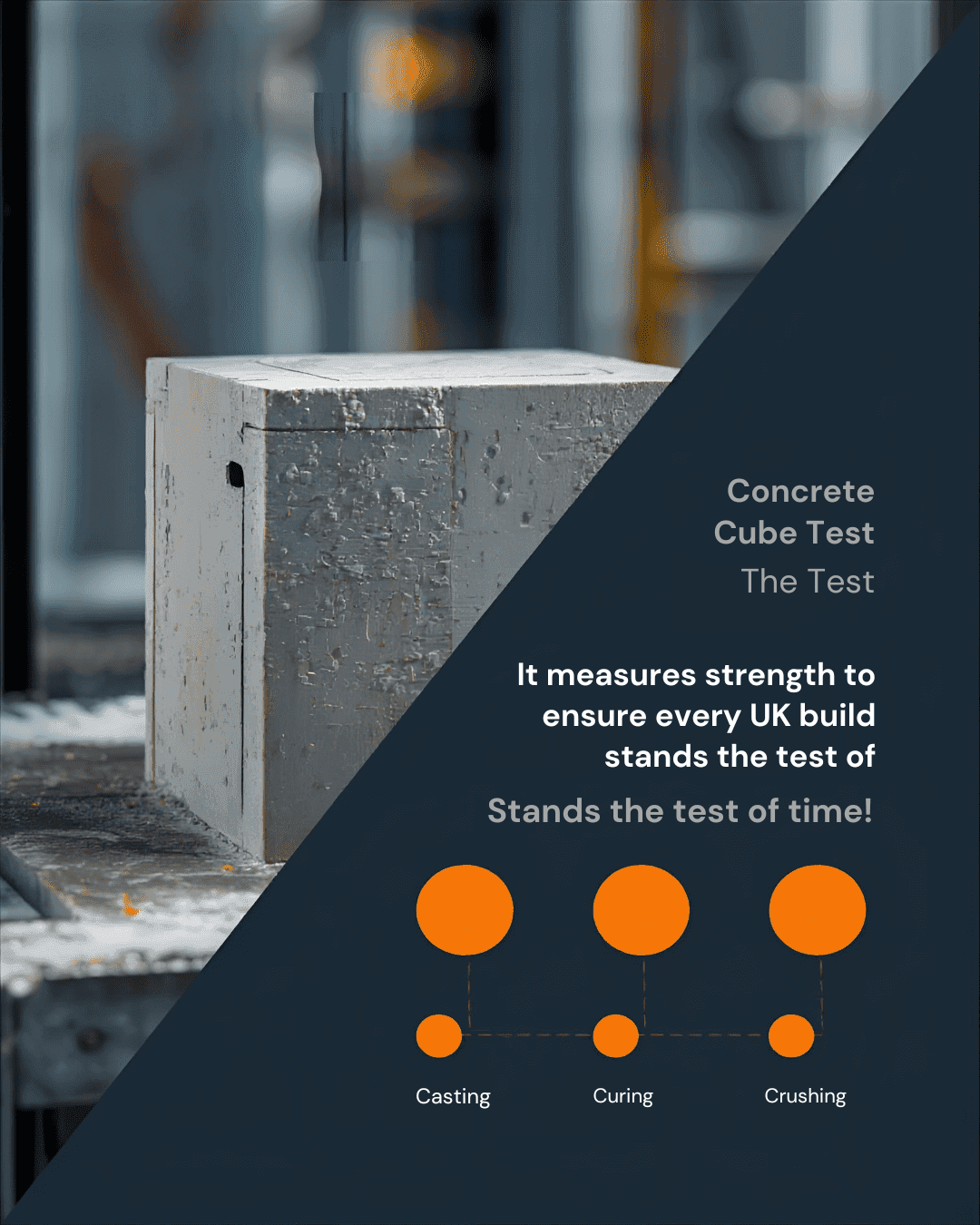
Concrete cube testing is a method used to measure compressive strength. Fresh concrete is poured into cube moulds. These cubes are then cured and tested under controlled conditions. The test shows how much load the concrete can safely handle.
In the UK, cube testing forms part of recognised construction standards. Therefore, it is widely used for foundations, slabs, extensions, and structural work. In addition, test data support inspections and approvals.
Cube testing is required to:
- Confirm concrete meets strength specifications
- Support structural design requirements
- Reduce the risk of hidden weaknesses
- Provide records for compliance and inspection
Without testing, concrete performance remains uncertain. As a result, future repairs or delays become more likely.
What Do Concrete Cube Tests Actually Measure?
Cube tests focus on compressive strength. This refers to how much pressure concrete can withstand before failure. Since concrete carries load rather than tension, this measurement is critical.
During concrete strength testing, cubes are crushed at set ages, often after 7 and 28 days. These time points show early and long-term strength development. Therefore, results help confirm whether the mix performs as expected.
Cube tests measure:
- Load-bearing capacity
- Strength consistency across batches
- Suitability for structural use
Although surface appearance may look fine, internal strength can differ. For this reason, structural concrete testing provides reassurance that the concrete performs beyond what is visible.
How Cube Testing Supports Quality Control Concrete Standards
Quality control in concrete relies on repeatable results. Cube testing supports this by checking strength across multiple samples. As a result, variations in batching or materials are detected early.
Within quality control concrete processes, testing helps suppliers and builders:
- Monitor mix consistency
- Identify performance issues quickly
- Maintain reliable strength levels
In addition, test results protect homeowners. If concrete meets required strength, the risk of future defects reduces. Instead of relying on assumptions, projects are supported by measured data.
Mighty Concrete operates as a local concrete supplier serving areas such as St Albans, Twickenham, Watford, Wembley, Windsor, and Wokingham. This regional presence supports consistent supply planning and quality-focused delivery for domestic projects.
Understanding Test Results And Why They Matter For Safety And Approvals
Concrete cube test results are more than numbers on a report. Instead, they confirm whether concrete meets the strength needed for safe use. Therefore, inspectors, engineers, and councils rely on these results during approvals.
Test reports show whether concrete achieves its target strength at set ages. In addition, results help confirm that the mix performs as designed. If results fall short, corrective steps can be taken early. As a result, larger problems are avoided later.
For homeowners, this matters in simple ways:
- Approved results support inspections and sign-off
- Proven strength reduces future repair risk
- Documentation protects property value
Without verified results, approvals may be delayed. Instead of progress, projects can stall.
Why Structural Concrete Testing Protects Long-Term Performance
Concrete often looks solid on the surface. However, internal strength is what carries the load. Therefore, structural concrete testing focuses on performance, not appearance.
Cube testing confirms that concrete can support walls, floors, and extensions over time. In addition, it checks that strength remains consistent across deliveries. This protects long-term durability.
Structural testing helps to:
- Prevent hidden weaknesses
- Reduce cracking linked to low strength
- Support safe load transfer
For domestic projects, this reassurance is valuable. Instead of relying on guesswork, performance is confirmed through testing.
How Certified Concrete Suppliers Ensure Consistent Strength
Not all suppliers follow the same standards. A certified concrete supplier works to control processes. These processes support repeatable strength and reliable results.
Certified suppliers focus on:
- Controlled batching and measured materials
- Routine concrete cube testing in the UK
- Recorded test results for traceability
- Ongoing quality control concrete checks
As a result, strength remains consistent across pours. In addition, problems are identified early. This protects both builders and homeowners from avoidable risk.
Mighty Concrete operates with this quality-first approach. As a local supplier, it supports projects with consistent batching and planned delivery. This helps ensure that tested concrete performs as expected on site.
Local Supply And Testing Support Across Key Areas
Reliable testing also depends on a reliable supply. Timing, consistency, and coordination all play a role. Therefore, local delivery matters.
Mighty Concrete provides affordable and reliable concrete with same-day and next-day delivery across Maidenhead, St Albans, Twickenham, Watford, Windsor, and nearby areas. This regional coverage supports smoother planning for domestic builds.
With local supply:
- Concrete arrives fresh and consistent
- Testing schedules stay on track
- Delays linked to logistics are reduced
As a result, quality checks and construction progress remain aligned.
Why Tested Concrete Reduces Risk And Long-Term Costs
Untested concrete may cost less upfront. However, a hidden weakness often leads to higher costs later. Therefore, testing acts as protection, not an extra step.
Benefits of tested concrete include:
- Fewer structural repairs
- Reduced approval delays
- Stronger long-term performance
By using concrete strength testing and verified results, projects avoid costly corrections. Instead, they build and move forward with confidence and clarity.
Choose Concrete That’s Tested, Verified, And Proven
Concrete quality should never rely on assumptions. Instead, it should be confirmed through concrete cube testing in the UK, supported by strong quality control concrete processes. When testing is in place, safety, approvals, and durability all improve.
Working with a certified concrete supplier helps ensure that every pour meets required standards. From strength verification to consistent delivery, tested concrete reduces risk and protects investment.
To discuss your project or arrange a reliable supply, contact Mighty Concrete on 01753 900066 or reach the team via WhatsApp for quick support and booking.
FAQs
- What Is Concrete Cube Testing Used For In The UK?
It checks compressive strength to confirm that concrete meets required standards. - Do Domestic Projects Need Concrete Strength Testing?
Yes. Testing helps support approvals and confirms long-term performance. - How Often Is Concrete Tested For Quality Control?
Tests are usually taken per batch or per pour, depending on project size. - Why Choose A Certified Concrete Supplier?
Certified suppliers follow controlled processes that deliver consistent strength and verified results.