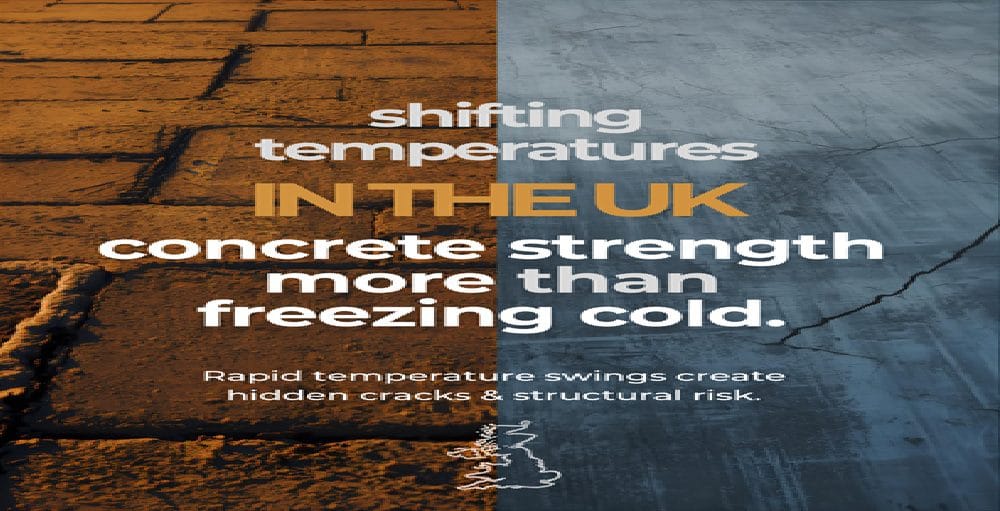
Cold weather has a direct impact on how concrete performs, especially during winter construction in the UK. When temperatures drop, concrete curing in cold weather slows down, which can affect early strength and long-term durability. This is why choosing the right cold-weather concrete is critical for successful winter builds.
As a result, both homeowners and builders across Ascot, Basingstoke, Bracknell, Cobham, and nearby areas must plan their work in detail. Many winter jobs now focus on using cold-weather concrete methods and improved concrete curing in cold weather, as these help to reduce cracking and weak surfaces.
In addition, the temperature effect on concrete strength is now an important part of every winter plan. Choosing the right concrete for winter in the UK has become essential for reliable results.
In this guide, we explain how winter-ready mixes support reliable construction.
Impact of UK Cold Weather on Concrete Strength
Low temperatures change how concrete gains strength. When concrete is fresh, it needs steady warmth to cure well. However, in winter, the reaction slows, and the mix stays soft for longer. The early strength may be low, and the surface may be damaged easily. This clearly shows the temperature effect on concrete strength, especially during prolonged cold spells.
Key effects of cold weather:
- Slower curing, because the hydration reaction drops in speed
- Higher crack risk, as freezing water expands in the mix
- Weak bond strength, if the temperature stays low for many hours
- Surface scaling, especially during freeze–thaw cycles
- Delayed finishing time, which increases labour needs
Cold-weather concrete can be more fragile during the first few hours. Therefore, it is important to protect the surface from frost and strong winds. In many towns such as Guildford, Harrow, Hemel Hempstead, Henley on Thames and High Wycombe, winter nights fall close to freezing. Concrete poured late in the day may not cure well.
Even so, many winter projects still move ahead. For this reason, builders must keep a close eye on temperature changes. When the temperature effect on concrete strength is ignored, the final result may not meet design standards. As a result, repairs may be needed much sooner.
Understanding The Temperature Effect On Concrete Strength
Temperature controls how fast concrete gains strength. When conditions are warm enough, the reaction moves at a steady pace. However, once the temperature drops below 5°C, the curing slows down. The mix stays soft, and it cannot carry weight for many hours.
Low temperatures cause:
- Slower hydration
- Reduced early strength
- Poor bonding inside the mix
- Higher chance of cracking
- Longer waiting times before building continues.
Winter construction in the UK becomes risky when cold air, rain, wind and frost combine and disrupt concrete curing in cold weather. As a result, many builders now choose concrete mixes made for winter in the UK. These mixes help maintain strength even when the air is cold. In addition, using a weather-resistant concrete mix in the UK reduces failures linked to freezing.
Because curing slows during winter, many projects now use insulated covers, warm water in the mix, or faster-setting additives. Therefore, choosing the right approach helps protect the structure. A mix designed for cold-weather concrete can support strength and steady curing even during hard winter days.
Best Practices For Concrete Curing In Cold Weather
Concrete needs heat to cure well. However, in winter, the cold slows the reaction, which can weaken the final structure. Builders must follow simple steps to protect the mix. These steps help reduce delays and improve strength. These steps are essential when working with concrete in winter in the UK.
Key curing practices:
- Cover the surface to keep warmth in
- Avoid late-day pours, as nights are colder.
- Check the temperature during the first 48 hours.
- Use warm water when the mix allows
- Keep frost away until the concrete is firm.
When these steps are followed, concrete curing in cold weather becomes safer. Even so, builders should choose concrete made for winter conditions. A winter-ready mix is more stable and less likely to crack.
Why Weather-Resistant Concrete Mix In The UK Matters
Winter affects every part of the curing stage. Standard mixes may not perform well in low temperatures. A weather-resistant concrete mix in the UK helps reduce cracking, slow curing, surface damage and early-age weakness. This makes weather-resistant mixes ideal concrete for winter in the UK, especially for domestic and light commercial projects.
Benefits of winter mixes:
- Better protection against frost
- Reduced cracking during freeze–thaw cycles
- More stable curing in cold air
- Lower chance of failed pours
As a local supplier, Mighty Concrete helps homeowners and builders choose mixes that suit winter construction in the UK. It also provides same-day and next-day delivery in Ascot, Basingstoke, Bracknell, Chertsey, Cobham, Epsom, Guildford, Harrow, Hemel Hempstead, Henley on Thames, High Wycombe, Langley and nearby areas. Because of this fast service, projects stay on schedule even during the UK winter months.
How Mighty Concrete Supports Safer Winter Construction
Mighty Concrete understands how winter affects the performance of fresh concrete. Therefore, these concrete supply mixes are made to handle low temperatures. These mixes help reduce delays, and they also prevent many common problems linked to cold-weather concrete.
Support provided:
- Steady batching for strong winter performance
- Clear advice on curing in cold weather
- Local delivery to major towns
- Mix options for small and large domestic work
Because winter construction in the UK can be difficult, choosing the right supplier helps protect both time and budget.
Choosing The Right Concrete For Winter Construction In The UK
Selecting the right concrete mix is essential for strength and durable winter building.
Factors to consider:
- Use of a winter-ready or fast-setting concrete mix
- Air temperature during the pour
- Strength level needed for the project
- Time available before cold nights
- Protection materials such as covers or sheets
A concrete mix for winter in the UK offers better strength and more stable curing. In addition, using a weather-resistant concrete mix in the UK can prevent long-term issues linked to cold temperatures. Many builders now plan winter pours carefully to avoid costly repairs later.
Build Strong And Safe Concrete During UK Winters
Cold weather can slow curing, weaken early strength and increase the risk of cracks. Winter projects need more care and the right mix design. A winter-ready blend helps reduce damage and offers more reliable results. When you choose a mix suited for cold weather concrete, you protect your project from the effects of frost, wind and low temperatures. This approach also helps avoid wasted time and extra repair costs. As a result, winter construction in the UK becomes safer, smoother and more predictable. For strong results, a weather-resistant concrete mix in the UK is often the best option for both small and large home improvements.
For reliable cold-weather concrete and expert guidance on winter construction in the UK, contact Mighty Concrete on 01753 900066 or message the team on WhatsApp for quick help or booking.
FAQs
- How Does Cold Weather Affect Concrete Curing In The UK?
Cold air slows curing, and this reduces early strength. Theconcrete may crack or weaken if it freezes before it hardens. - What Temperature Is Too Cold For Concrete Pouring?
Concrete should not be poured when the air is close to freezing. When the temperature drops below 5°C, the curing process slows, and the mix becomes more fragile. - How Can I Protect Concrete During Winter Construction In The UK?
Use covers, avoid late pours, and monitor the temperature. In addition, winter mixes help improve performance. - Does A Winter Concrete Mix Improve Strength In Cold Weather?
Yes. A winter-ready mix offers better early strength and supports safer curing in cold climates. It also helps reduce cracking and surface damage.