Why Temperature Effects on Concrete Strength in the UK Are More Dangerous Than Extreme Cold
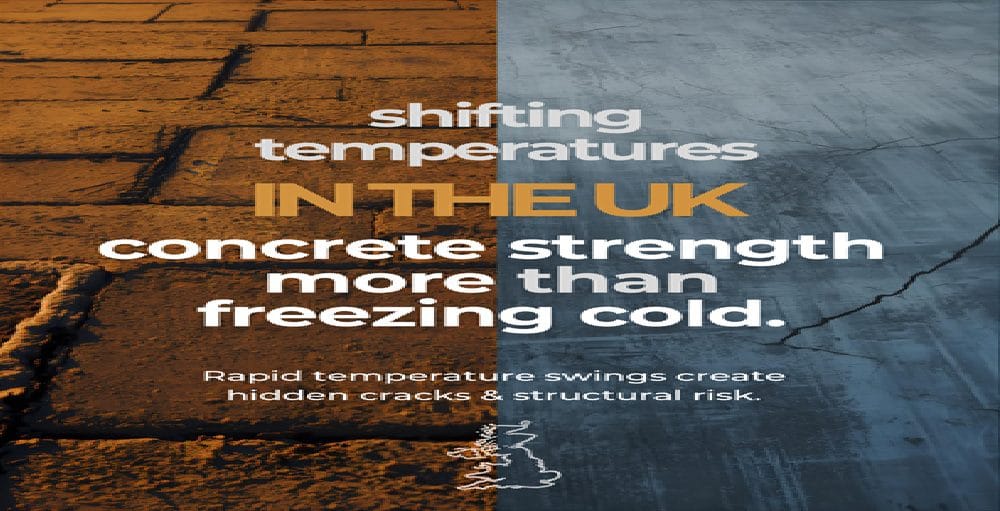
UK weather rarely stays the same for long. One day its mild and the next feels cold. Then temperatures rise again. As a result, temperature effects on concrete strength now pose a bigger risk to concrete than long periods of deep cold. While extreme cold is a concern, constant temperature change impacts concrete strength over time.
In addition, many homeowners focus only on visible cracks. However, the real damage often starts inside the structure. Repeated warming and cooling affect internal strength long before surface signs appear. Therefore, understanding the weather’s impact on concrete is vital for long-term performance. When ignored, these changes slowly reduce concrete durability in the UK, even in well-built structures.
How UK Temperature Changes Differ From Extreme Cold
Extreme cold stays stable for longer periods. Therefore, materials can be adjusted at a steady pace. In contrast, UK temperatures often rise and fall within the same day. As a result, concrete expands and contracts repeatedly.
For example, a mild afternoon may follow a cold morning. Then, temperatures drop again overnight. Each shift causes movement inside the concrete. Although this movement seems small, repeated cycles create stress.
Key differences include:
- A stable cold temperature allows gradual adjustment
- Temperature swings cause repeated internal movement
- Daily changes increase long-term strain
Meanwhile, this pattern continues throughout the year, not only in winter. Therefore, concrete in the UK faces stress across all seasons.
What Happens To Concrete During Repeated Temperature Changes
Concrete responds to temperature through movement. When it warms, it expands. When it cools, it contracts. This process is known as concrete thermal expansion. While natural, repeated movement places pressure on the internal structure.
At first, the concrete appears unchanged. However, stress builds over time. Each cycle adds strain. As a result, internal bonds weaken slowly. This process affects the temperature effect on concrete strength, even when no damage is visible.
Common effects include:
- Internal stress build-up
- Gradual weakening of bonds
- Reduced ability to handle load
Therefore, repeated changes cause more harm than a single cold spell.
Why Expansion And Contraction Reduce Concrete Strength Over Time
Expansion and contraction do not cause instant failure. Instead, they weaken concrete gradually. With each cycle, small internal shifts occur. Over time, these shifts reduce strength.
In addition, movement opens tiny paths inside the structure. Water enters these spaces. Then, when temperatures fall, moisture expands. As a result, stress increases further. This process directly affects concrete durability.
Important long-term effects include:
- Loss of internal strength
- Increased sensitivity to moisture
- Reduced resistance to wear
Therefore, managing temperature movement is essential for lasting results.
How Micro-Cracks Form Without Visible Warning
Micro-cracks develop below the surface. They remain hidden at first. However, they allow moisture to travel deeper into the concrete. Over time, this moisture causes further damage.
Meanwhile, repeated temperature fluctuations in the UK continue to widen these cracks internally. Although surfaces may look fine, durability drops steadily. As a result, repairs often appear sooner than expected.
This hidden damage explains why structures fail earlier than planned, even without clear warning signs.
Local Supply Matters When Managing Temperature Stress
At this stage, reliable material supply plays a role. Mighty Concrete serves St Albans, Twickenham, Watford, Wembley, Windsor, and Wokingham supports better planning and consistency. With steady delivery and controlled batching, concrete quality remains stable.
This local presence allows smoother scheduling and better preparation, which helps Concrete perform well under changing UK conditions.
Why UK Weather Causes More Long-Term Damage Than Extreme Cold
Extreme cold remains steady for longer periods. Therefore, materials adapt at a predictable rate. However, UK weather rarely stays stable. Instead, temperatures rise and fall repeatedly. As a result, concrete faces constant internal movement.
These repeated changes affect the weather’s impact on the UK more than long, cold spells. Each shift causes expansion, followed by contraction. Over time, this movement weakens internal bonds. Although the surface may look intact, its strength reduces gradually.
For domestic structures such as driveways, footings, and slabs, this stress builds quietly. Therefore, temperature swings create more long-term risk than steady winter cold.
How Controlled Mix Design Reduces Thermal Stress
Concrete performance depends heavily on how the mix is designed. A controlled mix balances cement, aggregates, and moisture. As a result, the concrete handles movement more effectively.
Well-designed mixes reduce internal stress during concrete thermal expansion. They also limit shrinkage during cooling periods. Therefore, the temperature effect on concrete strength becomes easier to manage.
Key benefits of controlled mix design include:
- Improved resistance to repeated movement
- Reduced internal stress during temperature changes
- Better long-term performance under UK conditions
In addition, consistency matters. When each batch remains uniform, concrete responds more predictably to temperature changes.
Choosing Concrete That Stays Stable Through UK Temperature Swings
Not all concrete performs the same way under stress. Therefore, homeowners should focus on stability rather than short-term strength alone. Concrete designed for UK conditions handles temperature fluctuations more effectively.
Important factors to consider when selecting the optimal concrete include:
- Balanced aggregate composition
- Consistent moisture control
- Proper cement ratios
- Reliable batching methods
Together, these elements protect concrete durability over time. As a result, structures last longer and require fewer repairs.
Why Reliable Production and Supply Supports Long-Term Durability
Mighty Concrete focuses on controlled production and reliable delivery. Rather than reacting to issues later, the process supports long-term performance from the start.
- Consistent batching for predictable strength
- Mix guidance suited to UK temperature patterns
- Timely delivery that supports proper placement
- Clear communication for better planning
As a result, concrete handles repeated expansion and contraction more effectively. This approach directly supports concrete durability UK across domestic projects.
Material quality matters. However, delivery reliability also plays a role. Concrete must arrive in the right condition and at the right time. Therefore, dependable local supply supports consistent results.
Mighty Concrete operates as a local supplier providing affordable and reliable concrete with same-day and next-day delivery across Twickenham, Watford, Wembley, Windsor, Wokingham, and surrounding areas. This regional coverage helps projects stay organised and reduces delays that affect curing and placement.
By maintaining consistency from batching to delivery, the concrete performs better under changing temperatures.
Concrete That Stays Stable Through UK Temperature Swings
The UK weather will continue to change. Mild days will follow cold nights. Temperatures will rise, then fall again. Therefore, concrete must be designed to handle movement, not just cold.
By understanding temperature fluctuations in the UK, homeowners can make better choices. Managing concrete thermal expansion and the temperature effect on concrete strength helps prevent early failure. In addition, choosing a reliable supply and controlled mixes protects long-term value.
For concrete that stays stable through UK temperature changes , contact Mighty Concrete on 01753 900066 or reach the team via WhatsApp for quick support and booking.
FAQs
1. Why are temperature fluctuations more damaging than extreme cold?
Repeated warming and cooling create ongoing stress inside concrete, which weakens it over time.
2. How does thermal expansion affect concrete strength?
Expansion and contraction place pressure on internal bonds, reducing long-term strength.
3. Can concrete cracks form without being visible?
Yes. Micro-cracks develop internally and reduce durability before surface damage appears.
4. How can homeowners improve concrete durability in the UK?
Using a controlled mix design and a reliable supply helps concrete handle UK temperature changes better.