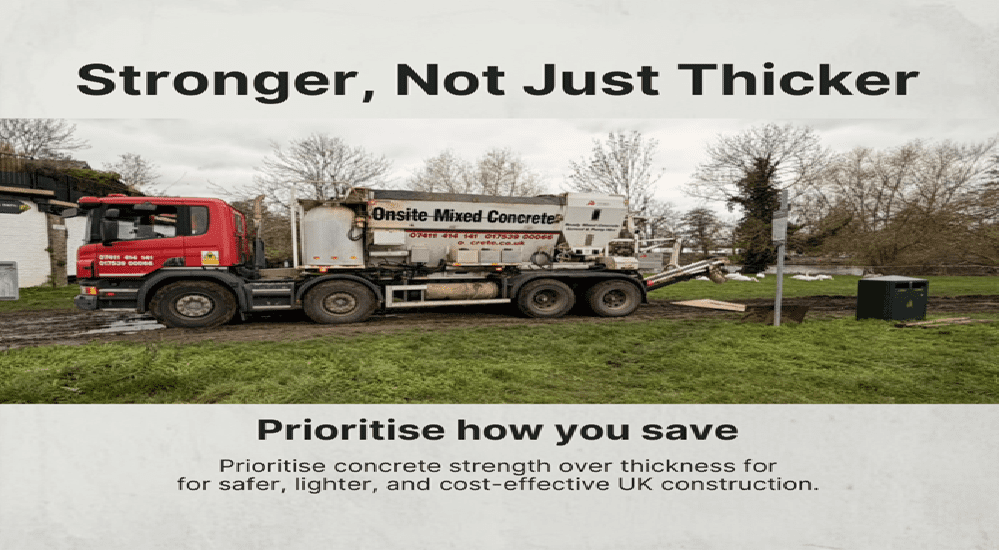
In UK construction, many builders still rely on thicker concrete slabs to improve performance. However, thickness alone does not guarantee strength. In practice, concrete strength in the UK plays a far greater role in durability, safety, and long-term performance. When slabs fail, the issue is often not depth, but weak internal structure.
For this reason, understanding concrete load-bearing capacity has become essential for modern builds. These factors determine how concrete handles weight, movement, and stress over time. This article explains why stronger concrete outperforms thicker concrete in real UK conditions.
What Does Concrete Strength Actually Mean In The UK?
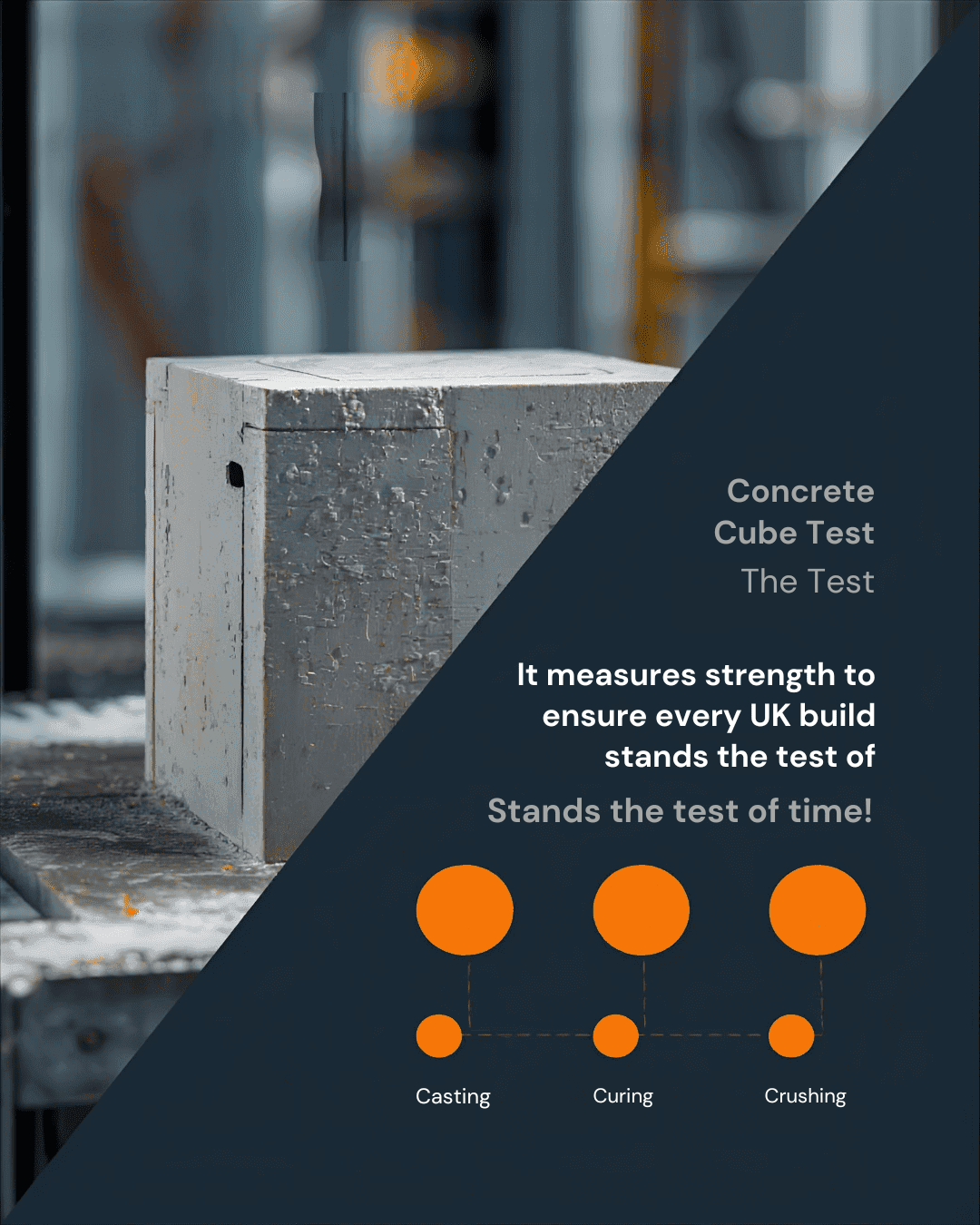
Concrete strength refers to how much pressure concrete can handle before it fails. In simple terms, it shows how well concrete supports weight. In the UK, strength is measured through compressive testing, not by visual appearance or slab depth.
However, many projects focus on thickness instead of performance. While thickness adds mass, it does not improve internal bonding. As a result, weak concrete can still crack or sink, even when poured deep.
Instead, structural concrete in the UK relies on a strong internal structure. This structure allows loads to spread evenly through the slab. Therefore, stronger concrete delivers better results with less material.
Why Thicker Concrete Does Not Always Mean Stronger Concrete
A common site practice is adding more concrete when the strength is uncertain. However, this approach often fails. Extra depth cannot fix a weak mix.
For example, a slab with a poor concrete mix design in the UK may still crack under weight. This happens when cement ratios, aggregates, or water levels are incorrect. Even at greater thickness, the slab lacks internal strength.
Instead of adding depth, builders should focus on concrete strength UK. Stronger concrete resists movement, handles stress, and maintains shape under load. Therefore, strength-first planning avoids wasted material and rework.
How Concrete Load Bearing Capacity Affects Real Builds
Load-bearing capacity explains how concrete handles weight from vehicles, walls, or structures. In domestic and light commercial projects, this matters every day.
Driveways support repeated vehicle loads. Foundations carry building weight. Floor slabs handle constant pressure. In each case, concrete load-bearing capacity depends on strength, not thickness alone.
When weak concrete is used, slabs may flex. Over time, cracks appear. Settlement follows. Therefore, improving strength improves performance across the entire structure.
The Role Of Concrete Mix Design In Long-Term Performance
Concrete mix design controls strength. It defines how cement, aggregates, and water work together. In the UK climate, this balance matters even more.
Too much water weakens concrete. Poor aggregate grading reduces bonding. Low cement ratios limit strength gain. As a result, slabs fail earlier than expected.
In contrast, high-strength concrete uses a balanced mix design to deliver better results. Strong mixes improve durability while using less volume. Therefore, builders achieve better outcomes without over-pouring.
It is important to recognise the role of a reliable supply. Mighty Concrete operates as a local supplier serving St Albans, Twickenham, Watford, Wembley, Windsor, Wokingham, and nearby areas. This regional coverage supports planned pours and consistent supply for domestic and trade projects.
Common Problems Caused By Weak Concrete Mixes
Weak concrete causes problems long before visible failure appears. At first, the surface may look fine. However, internal weakness soon shows through cracks, uneven settlement, and early wear.
For example, slabs poured with a poor concrete mix design in the UK often fail under normal use. Driveways develop cracks. Floors lose level. Foundations show early stress signs. These failures occur even when slabs are thick.
In addition, repairs become expensive. Cutting out failed concrete wastes time and money. As a result, builders face delays and unhappy clients. Stronger concrete avoids these risks from the start.
Strength-First Construction: A Smarter Approach For UK Projects
Strength-first construction focuses on performance, not volume. Instead of adding depth, builders choose concrete designed to handle real loads.
This approach delivers clear benefits:
- Less material is used on-site
- Better resistance to cracking and movement
- Improved concrete load-bearing capacity
- Longer service life for slabs and foundations
In the UK, changing ground conditions and regular loading demand require better performance. Therefore, concrete strength in the UK has become a priority for modern construction work.
How Mighty Concrete Supports Strength-First Construction
At this stage, supplier choice matters. Mighty Concrete supports builders who prioritise performance over over-pouring.
As a reliable local supplier, Mighty Concrete provides same-day and next-day delivery across St Albans, Twickenham, Watford, Wembley, Windsor, Wokingham, and nearby areas. This helps builders plan pours accurately and avoid rushed decisions on site.
Rather than supplying generic mixes, Mighty Concrete supports projects with correctly balanced concrete options. This allows builders to select strength levels suited to each application. As a result, slabs perform as intended without unnecessary thickness.
When High-Strength Concrete Is The Better Choice
Not every project needs extra depth. However, many projects benefit from high-strength concrete.
This includes:
- Driveways with regular vehicle use
- Foundations carrying structural loads
- Floor slabs in extensions and conversions
- Areas exposed to long-term stress
In these cases, strength improves performance far more than added thickness. Therefore, builders achieve safer, more reliable outcomes with less material.
Why Structural Concrete Matters In UK Conditions
UK construction faces regular challenges. Ground movement, moisture, and loading all affect performance. Structural concrete UK addresses these issues by delivering consistent strength throughout the slab.
Strong concrete spreads loads evenly. It resists movement. It maintains shape over time. Therefore, structures remain stable and durable under daily use.
Thickness alone cannot provide this protection. Only a strength-focused design can.
Build Smarter With Strength-First Concrete
In UK construction, stronger concrete delivers better results than thicker slabs. Weak mixes fail regardless of depth. Strong mixes perform with less volume.
By focusing on concrete strength UK, builders improve durability, load performance, and client satisfaction. This approach reduces waste, cuts repair costs, and supports long-term structural integrity.
Stop over-pouring. Start using stronger concrete.
For reliable supply, expert guidance, and fast delivery, contact Mighty Concrete on 01753 900066 or reach the team via WhatsApp for quick support and booking.
FAQs
- Is thicker concrete always stronger in UK construction?
No. Strength depends on mix quality, not slab depth. Weak concrete can fail even when thick. - What improves concrete load-bearing capacity the most?
Proper mix design and higher strength grades improve load performance more than added thickness. - When should high-strength concrete be used?
It is ideal for driveways, foundations, and slabs carrying regular or heavy loads. - How does concrete mix design affect durability?
Balanced mix design improves bonding, strength, and resistance to cracking over time.