Unpredictable weather is a regular challenge for construction projects across the UK. Sudden rain, cold spells,
nd damp ground conditions often interrupt concrete work and slow progress on domestic sites. For homeowners, these interruptions can lead to delays, added labour costs, and disrupted schedules.
To reduce these risks, many builders now rely on pumped concrete in the UK as a more controlled and dependable method of placing concrete. When combined with ready-mixed concrete, pumping allows faster placement, better consistency, and less exposure to rain and cold conditions. This approach has become especially valuable for domestic projects that need to progress steadily, even when the weather changes without warning.
Why UK Weather Frequently Disrupts Traditional Concrete Pouring
The UK climate is known for sudden showers, temperature drops, and windy conditions. These changes affect both concrete performance and on-site working conditions. Traditional pouring methods, which rely heavily on manual handling, struggle to cope with these challenges.
Manual pouring requires concrete to be transported across open ground using wheelbarrows or buckets. In wet or muddy conditions, this process becomes slower and less controlled. Rain can enter the concrete, weakening the mix, while slippery ground increases the risk of accidents and delays.
Common weather-related issues include:
- Rain is interfering with surface quality and curing
- Cold temperatures are slowing setting times
- Wind carrying debris into fresh concrete
- Muddy ground making manual transport difficult
- Increased risk of slips and uneven placement
These challenges are common on domestic sites, particularly during autumn and winter. As a result, many homeowners and contractors now look for weather-resistant concrete methods that offer greater control in poor conditions.
How Pumped Concrete Improves Reliability In Poor Weather
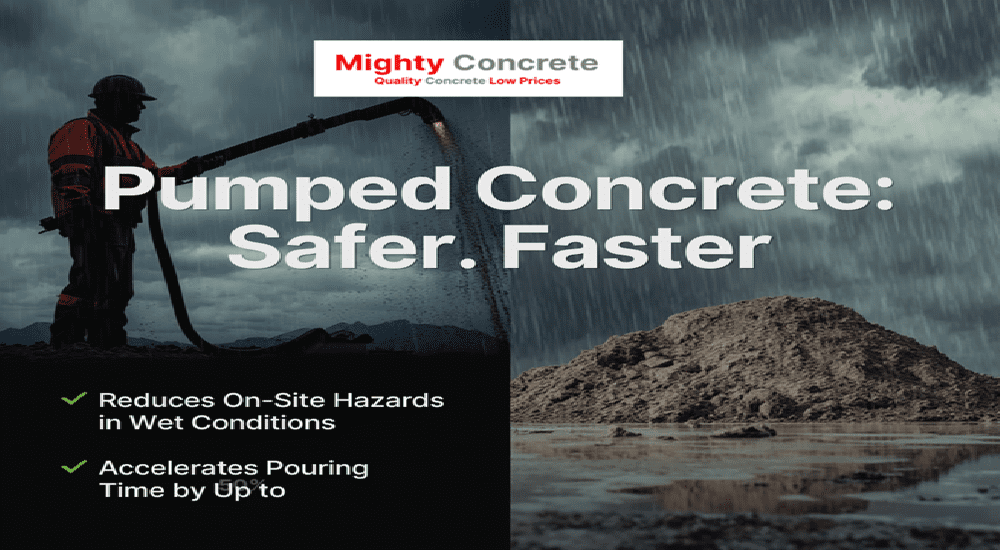
Concrete pumping offers a more controlled way to place concrete during challenging conditions. The concrete is transferred directly from the delivery vehicle to the pour location through sealed pipes. This limits exposure to rain, wind, and temperature changes.
By reducing the time concrete spends in the open air, pumping helps maintain mix quality. It also removes the need for repeated manual transport across wet or uneven ground. This makes the process more predictable and easier to manage when weather conditions are less than ideal.
Key advantages include:
- Faster placement, reducing exposure to rainfall
- Better consistency from truck to pour point
- Reduced risk of washout or surface damage
- Improved control in confined or hard-to-reach areas
For domestic projects such as driveways, foundations, slabs, and extensions, pumped concrete helps keep work moving even when conditions are uncertain.
Why Concrete Pumping Allows Faster Progress During Rain
Rain slows most construction activity, especially when concrete is handled manually. Wet ground limits movement, and repeated trips with wheelbarrows quickly create messy and unsafe working conditions.
With concrete pumping, the mix is delivered continuously to the pour area. This allows work to continue at a steady pace, even during light or unexpected rainfall. The site remains cleaner, and workers spend less time navigating slippery surfaces.
Concrete pumping supports:
- Continuous pouring without frequent stops
- Reduced site congestion and surface mess
- Lower risk of slips and manual handling strain
- More consistent results during sudden weather changes
This is why fast concrete pouring in rain is now more achievable using pumping methods on domestic UK sites.
The Role Of Ready-Mixed Concrete In Unpredictable Conditions
Ready-mixed concrete plays an important role in improving reliability during poor weather. The concrete is batched in a controlled environment, which ensures consistent strength and quality before it arrives on site.
In contrast, on-site mixing becomes difficult during rain or cold conditions. Materials can become wet, measurements can be less accurate, and mixing time can be inconsistent. Ready-mixed supply removes these risks and supports smoother pours when conditions change quickly.
Benefits of using ready-mixed concrete include:
- Consistent strength and workability
- Reduced handling and preparation on-site
- Easier planning for early or short pours
- Better control over curing conditions
When paired with pumped concrete, ready-mixed supply helps maintain quality while reducing weather-related delays.
Safety And Efficiency Benefits On Domestic Sites
Wet weather increases risks on domestic building sites. Slippery surfaces, uneven ground, and manual transport all raise the likelihood of accidents and slowdowns.
Concrete pumping reduces these risks by limiting manual handling and keeping access routes clear. Workers focus on placement rather than transport, which improves site organisation and overall efficiency.
Key site benefits include:
- Fewer movements across wet ground
- Reduced clutter around the pour area
- Better control of the concrete flow
- Improved working conditions in confined spaces
These benefits make pumped concrete in the UK particularly suitable for residential projects.
How Pumped Concrete Helps Control Costs During Poor Weather
Weather-related delays often lead to increased labour costs, wasted materials, and rework. Pumped concrete helps control these costs by allowing work to continue efficiently when conditions change.
Faster placement reduces labour hours. Controlled delivery limits waste from damaged or washed-out concrete. Steady progress also reduces the need to reschedule trades or repeat preparation work.
Cost-related benefits include:
- Fewer delays and reduced labour time
- Lower material waste
- Less rework due to weather damage
- More predictable project timelines
For homeowners, this results in better budget control and fewer unexpected expenses.
Local Support That Helps Projects Stay On Track
For domestic projects, local coordination matters, especially when weather conditions are unpredictable. Mighty Concrete supports homeowners by supplying ready-mixed concrete and pumped concrete solutions tailored to residential work.
Operating across Ascot, Basingstoke, Bracknell, Chertsey, Cobham, Epsom, Guildford, Harrow, Hemel Hempstead, Henley – on -Thames, High Wycombe, Langley, and nearby areas, Mighty Concrete offers same-day and next-day delivery. This flexibility allows projects to move forward when weather windows are short.
A Smarter Way To Pour Concrete In Any Weather
Unpredictable UK weather does not have to bring concrete work to a halt. Pumped concrete in the UK provides a faster, more controlled, and more reliable method of placement during rain or cold conditions.
When combined with ready-mixed concrete, pumping supports consistent quality, improved site efficiency, and steady progress on domestic projects. This approach reduces delays, limits waste, and helps homeowners complete work with confidence.
For reliable supply and pumping support, contact Mighty Concrete on 01753 900066 or reach the team via WhatsApp to book your delivery.
FAQs
- How does pumped concrete help during wet UK weather?
Pumped concrete transfers the mix directly to the pour point, reducing exposure to rain and maintaining consistent quality. - Is pumped concrete safer than manual pouring?
Yes. It limits manual handling and improves site control, especially in wet conditions. - Can pumped concrete speed up domestic projects?
Yes. Pumping allows continuous placement, supporting fast concrete pouring in the rain. - Does ready-mixed concrete perform well in poor weather?
Yes. Ready-mixed concrete is produced under controlled conditions, helping maintain strength and consistency when weather changes.