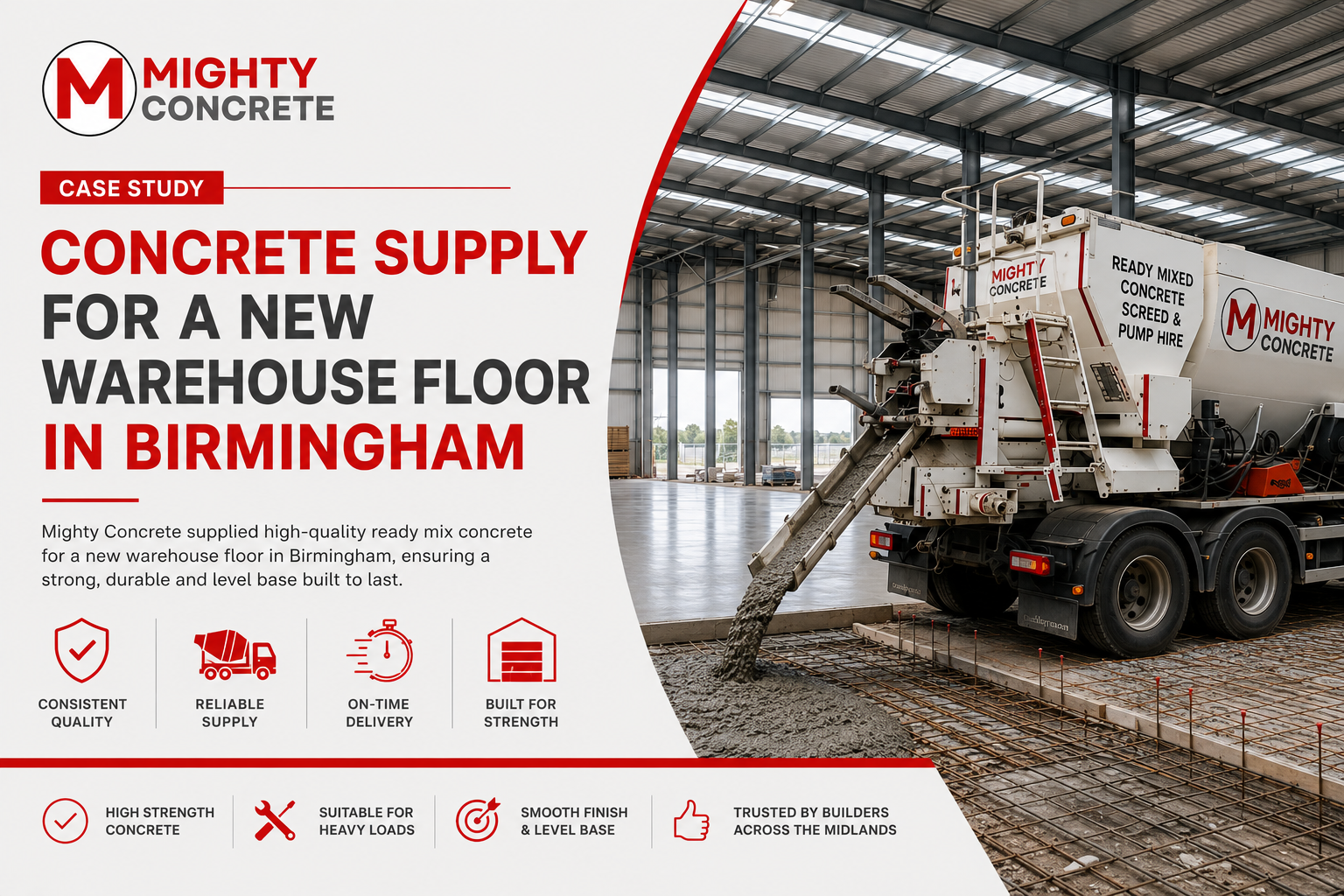
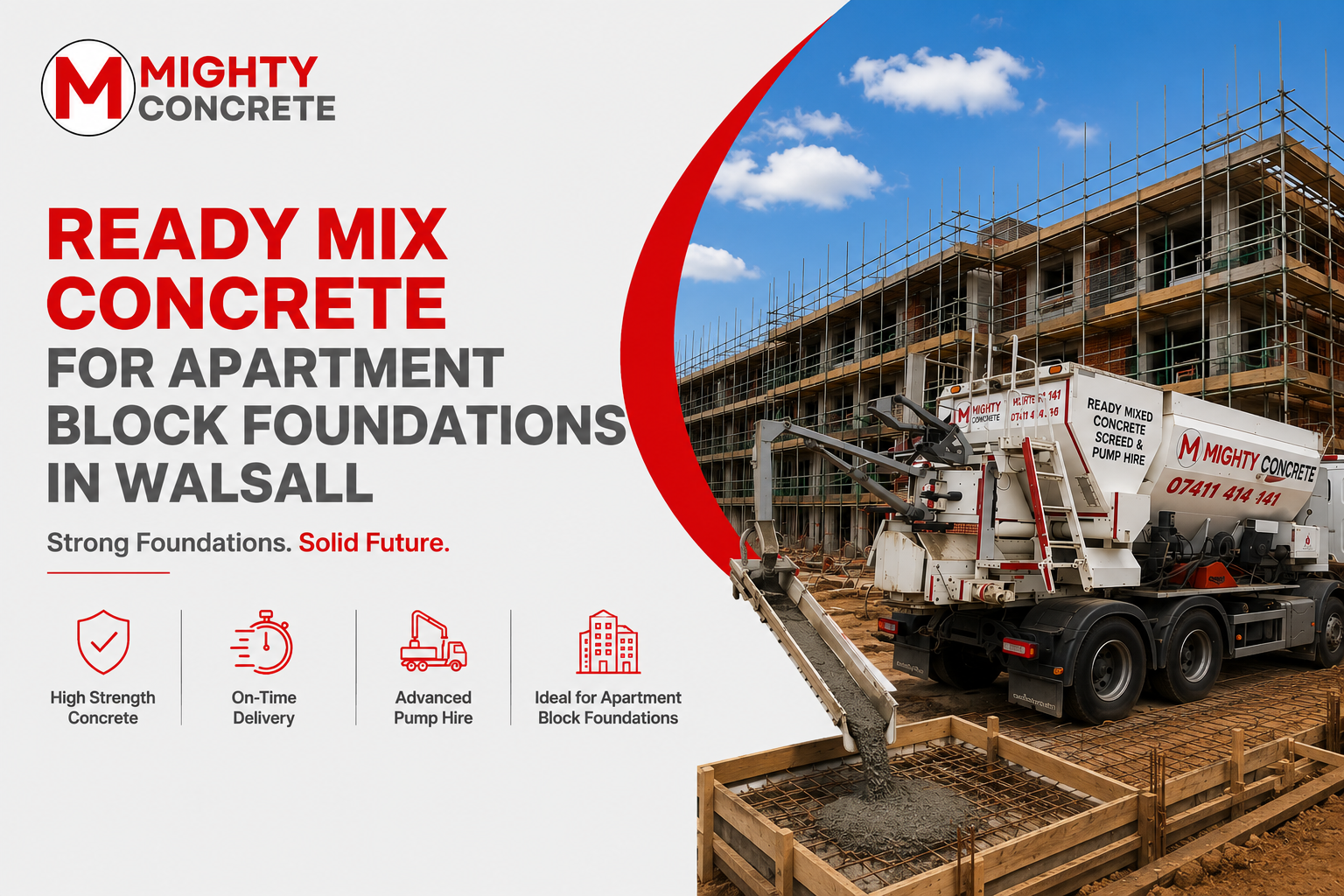
Building On A Working Farm Requires More Than A Concrete Delivery
Agricultural construction rarely takes place on an empty site. Farm buildings sit within working environments where tractors, machinery, deliveries, and other vehicles may need access throughout the day. Therefore, concrete supply must fit around the farm’s normal operations.
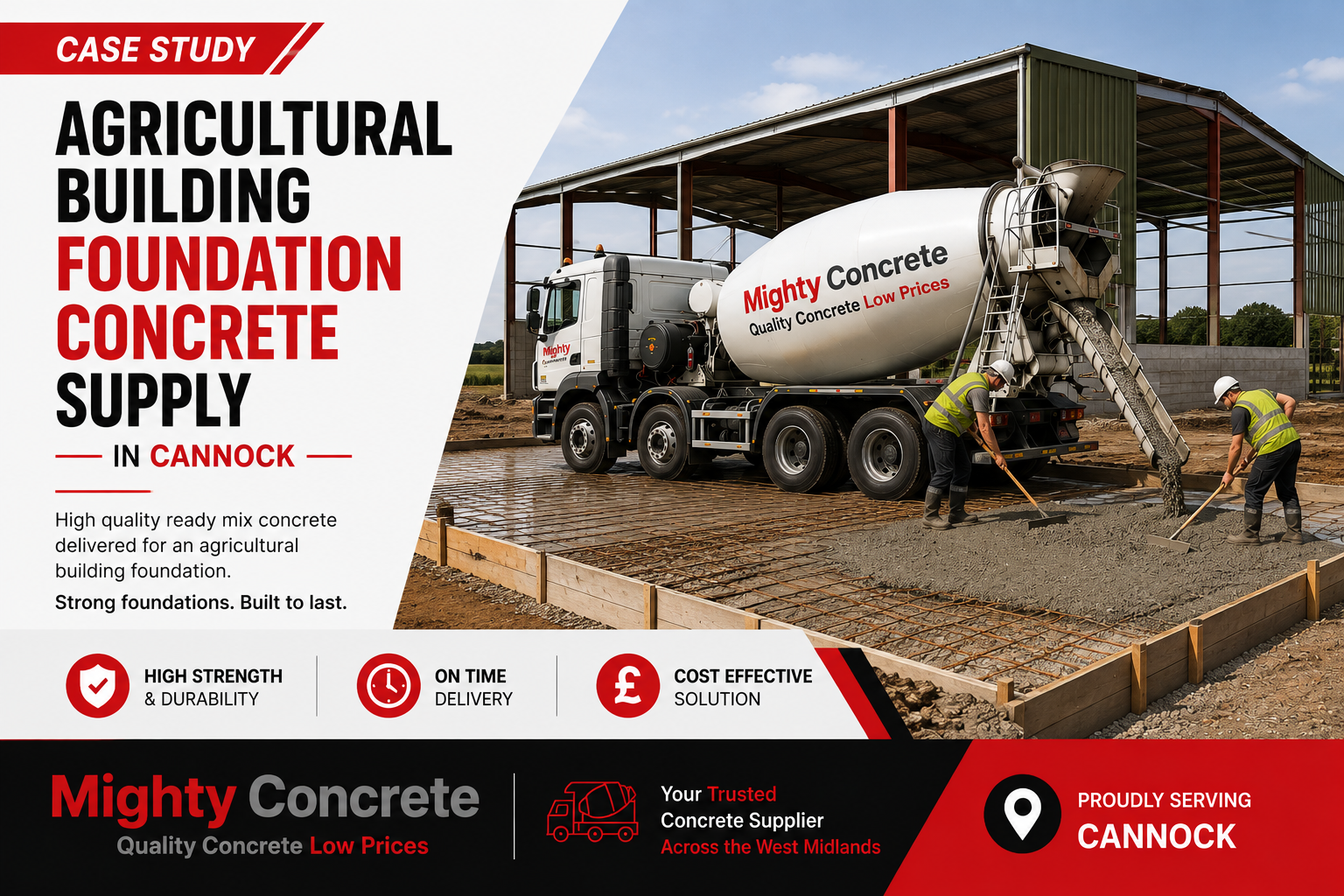
That was the key consideration for this project in Cannock, Staffordshire. A farm contractor required concrete for the foundations and floor preparation of a new agricultural storage building.
The construction programme was planned for three days. However, concrete deliveries also needed to work around existing vehicle and machinery movements across the farm.
Project At A Glance
| Project Detail | Information |
| Project Type | Agricultural Building Foundation |
| Location | Cannock, Staffordshire |
| Concrete Supplied | Ready-Mix Concrete |
| Main Applications | Foundation Concrete & Floor Preparation |
| Project Duration | Three Days |
| Additional Support | Concrete Quantity Guidance & Scheduled Deliveries |
The Site Was Already In Use
A farm is a working environment, even while construction is taking place.
Tractors may need to move between fields. Machinery may need to enter or leave storage areas. Farm vehicles can also follow schedules that have little connection with the construction programme.
For this project, those movements created a practical access issue.
Concrete vehicles needed to reach the construction area without interfering with essential farm operations. At the same time, the contractor needed reliable supply for the foundation and associated floor preparation.
This made delivery timing an important part of the construction plan.
How The Delivery Schedule Worked Around Farm Operations
Mighty Concrete coordinated delivery times directly with the contractor before concrete was brought to site.
The schedule was arranged around the farm’s existing vehicle and machinery movements. This gave the contractor a defined window for concrete delivery while helping keep essential access routes available.
Rather than treating the farm like a conventional construction site, the delivery approach reflected the way the property was already being used.
That distinction matters on agricultural projects. A delivery that works well on an empty building site may create unnecessary disruption on an active farm.
Why Agricultural Concrete Projects Need Site-Specific Planning
Agricultural buildings can serve very different purposes. Storage buildings, livestock facilities, workshops, and machinery areas all have different construction requirements.
However, the site itself often presents a shared challenge: construction takes place alongside normal agricultural activity.
Good agricultural construction concrete planning should therefore consider:
- Existing tractor and machinery routes.
- Delivery vehicle access.
- Timing of concrete arrivals.
- Foundation preparation.
- Floor preparation requirements.
- The contractor’s daily construction programme.
These factors help ensure that concrete supply supports the build rather than interfering with the wider operation.
Supporting The Foundation and Floor Preparation
The project required foundation concrete for the new agricultural storage building, alongside concrete works associated with floor preparation.
Before deliveries were arranged, Mighty Concrete provided concrete quantity guidance to help the contractor plan the required supply.
Scheduled deliveries then supported the three-day construction programme. By coordinating arrival times with the contractor, the concrete vehicles could access the site without interfering with essential farm movements.
This approach allowed the contractor to concentrate on the construction work while the farm continued its normal activities around the site.

Agricultural construction has its own practical demands.
A farm building may be located away from a main road or within a larger working site. Access routes may also be shared with tractors, trailers, plant, and other machinery.
Consequently, farm building concrete UK projects benefit from delivery planning that considers the entire site rather than only the building footprint.
| Site Consideration | Why It Matters |
| Farm vehicle movements | Keeps essential operations running |
| Machinery access | Prevents conflicts with delivery vehicles |
| Construction access | Gives concrete vehicles a clear route |
| Delivery timing | Helps avoid busy operating periods |
| Quantity guidance | Supports efficient concrete ordering |
The right approach depends on the individual farm and construction programme.
The Outcome At Cannock
The foundation and associated concrete works progressed according to the planned three-day construction schedule.
Through coordinated deliveries and clear communication with the contractor, Mighty Concrete helped the concrete supply fit around existing farm operations.
The project did not require the farm’s normal vehicle and machinery movements to become an afterthought. Instead, those activities were considered when arranging the delivery schedule.
For the farm contractor, that meant the building work could continue while essential site operations remained accessible.
What This Project Shows About Farm Building Construction
The Cannock project demonstrates a simple but important principle: agricultural construction needs to work within the environment that already exists.
Concrete quality remains important, but delivery logistics can also influence how smoothly the project progresses. On an active farm, timing and access need to be considered before the first concrete vehicle arrives.
For contractors working on agricultural concrete Cannock projects, useful preparation includes:
- Review existing machinery routes before delivery.
- Identify suitable access for concrete vehicles.
- Discuss delivery windows with the contractor.
- Estimate concrete quantities before scheduling loads.
- Consider farm operations when planning each construction day.
These steps can help reduce avoidable disruption without changing the way the farm operates.
Concrete Supply That Fits Around The Working Farm
Agricultural buildings are part of working businesses, so construction needs to respect the activities already taking place on site.
This Cannock project shows how Mighty Concrete supported a new agricultural storage building through ready-mix concrete, foundation supply, quantity guidance, and scheduled deliveries. By coordinating concrete vehicle access with existing farm machinery movements, the foundation and floor preparation works progressed according to schedule.
Whether you are developing a storage building, machinery facility, workshop, or another agricultural structure, an experienced ready-mix concrete supplier can help coordinate supply to suit the practical realities of the site.
Call or WhatsApp:01753900066 to discuss your agricultural concrete requirements and arrange reliable delivery.
FAQs
1. Why Does Farm Access Matter When Planning Concrete Deliveries?
Farm sites often remain active during construction. Tractors, machinery, trailers, and other vehicles may need to use the same access routes as concrete delivery vehicles. Coordinating arrival times helps reduce conflicts and keeps essential farm operations moving.
2. What Concrete Is Used For Agricultural Building Foundations?
The required concrete specification depends on the building design, structural requirements, and intended use. Contractors should confirm the required grade and application before ordering foundation concrete for an agricultural building.
3. Can Concrete Be Delivered While A Farm Remains Operational?
Yes, delivery can often be coordinated around existing farm activity. For this Cannock project, Mighty Concrete arranged delivery times with the contractor so concrete vehicles could access the site without interfering with essential machinery movements.
4. What Should Contractors Check Before Ordering Agricultural Construction Concrete?
Contractors should review access routes, machinery movements, delivery timing, concrete quantities, and the construction programme. Early coordination helps the ready-mix concrete supplier understand the site’s practical requirements before delivery begins.