Key Takeaways
- Keeping a business operational during construction requires careful phasing and delivery planning.
- A commercial yard must withstand regular vehicle movements, deliveries, and loading activity.
- Dividing the work into sections can maintain access while concrete construction continues.
- This Oldbury project shows how Mighty Concrete coordinated concrete deliveries around an active business.
- Phased construction allowed the new yard to be completed without requiring a full shutdown.
How Can A Business Keep Operating During Yard Construction?
A commercial yard does not always have to close while a new concrete surface is being built. With a phased approach, contractors can work on defined sections while keeping other parts of the premises accessible.
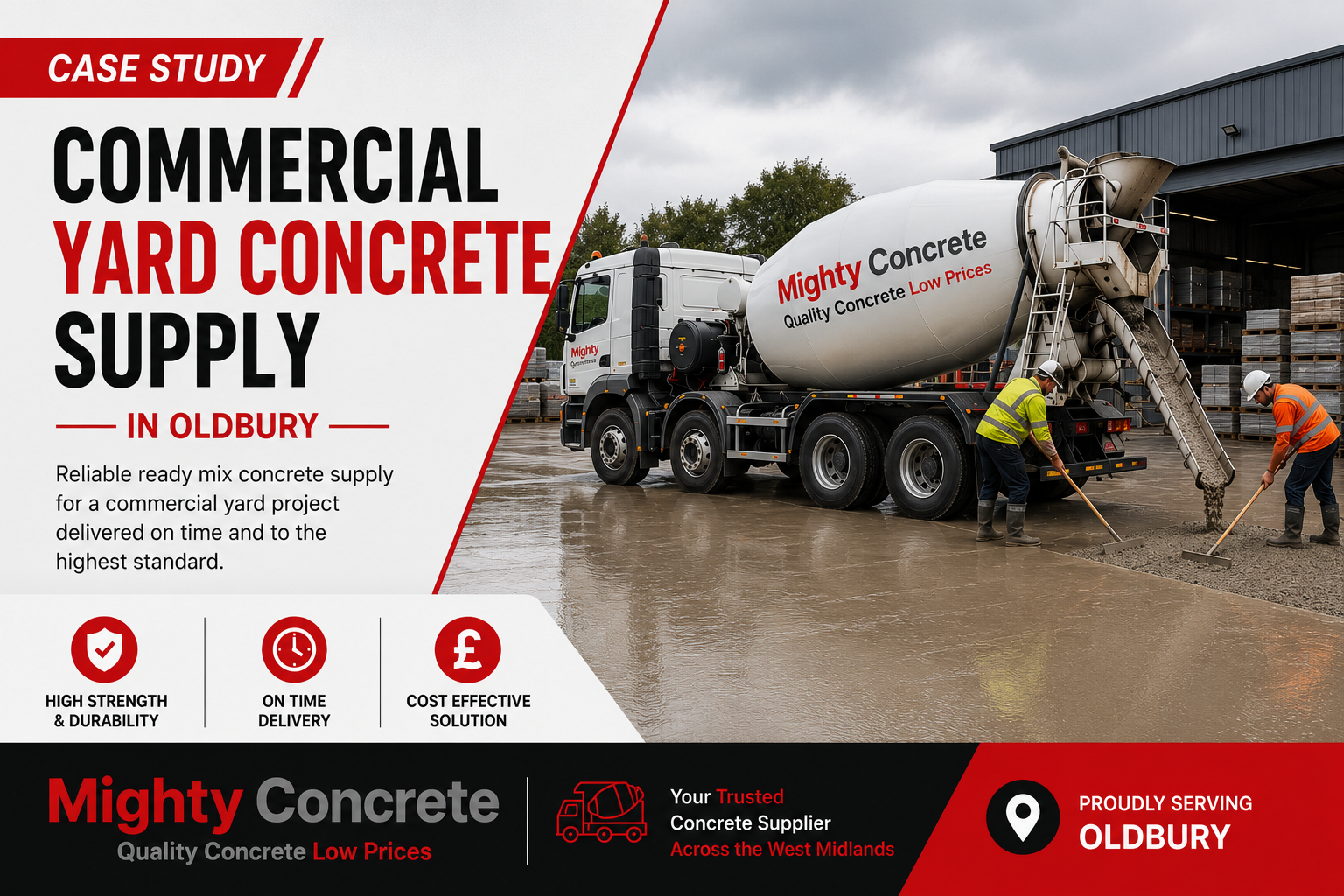
That was the central requirement for this project in Oldbury, West Midlands. A local business needed a new concrete yard for regular commercial vehicle movements, deliveries, and loading activity.
However, the business also needed to maintain access during the three-day construction programme. Therefore, the work had to be organised around daily operations rather than treating the entire yard as one construction zone.
The Project At A Glance
| Project Detail | Information |
| Project Type | Commercial Yard Construction |
| Location | Oldbury, West Midlands |
| Concrete Supplied | High-Strength Ready Mix Concrete |
| Delivery Programme | Multiple Scheduled Deliveries |
| Project Duration | Three Days |
| Additional Support | Volume Planning & Delivery Coordination |
The Business Continuity Challenge
The main constraint was access.
The business could not simply stop vehicle movements and loading activity for three days. Part of the premises needed to remain available while construction progressed elsewhere.
This created a practical need for clear boundaries between the active construction area and the part of the yard still being used.
The contractor therefore divided the yard into workable sections. This allowed construction to progress in stages while preserving access around the active work area.
Why Phased Yard Construction Can Work Better For Active Businesses
A large commercial yard can serve several functions at the same time. It may handle deliveries, vehicle movements, loading, storage, and staff access throughout the working day.
Closing the entire area can therefore create significant operational problems.
Phased construction offers a different approach:
- One section can undergo concrete work while another remains accessible.
- Vehicle movements can be redirected around the active area.
- Concrete deliveries can follow the contractor’s current work section.
- Business operations can continue where access remains available.
- Construction can progress without treating the whole site as unavailable.
The approach depends on suitable site planning, but it can be valuable where complete closure is not practical.
How Mighty Concrete Worked Around The Active Site
For this Oldbury project, Mighty Concrete coordinated concrete deliveries with the contractor’s section-by-section pour schedule.
The contractor first divided the yard into workable areas. Delivery timings were then matched to the planned concrete pours, allowing each section to be supplied when it was ready.
This coordination helped prevent concrete vehicles from arriving at unsuitable times. It also supported access around the active construction area, which was important for the business throughout the three-day programme.
Alongside the delivery schedule, Mighty Concrete provided concrete volume planning support. This helped the contractor organise the required supply for each stage of the work.
What Does A Phased Concrete Pour Look Like?
A phased commercial yard pour involves completing defined sections rather than treating the entire yard as one continuous work area.
A typical project sequence can include:
| Stage | Site Activity |
| 1 | Prepare the first construction section |
| 2 | Arrange concrete delivery for that section |
| 3 | Place and finish the concrete |
| 4 | Maintain access through the available yard area |
| 5 | Move construction activity to the next section |
The exact sequence depends on the site’s layout and the contractor’s programme. In this project, the section-by-section approach helped balance construction activity with the business’s need for continued access.
Choosing Concrete For A Commercial Yard
Commercial yards face different demands from many residential concrete areas. Regular vehicle movements, deliveries, and loading activity can place repeated loads on the finished surface.
For that reason, the project required high-strength ready-mix concrete rather than a solution designed only for light domestic use.
The appropriate concrete specification should always follow the project’s structural and design requirements. Contractors should confirm the required strength and other specifications before ordering.
For this Oldbury yard, the concrete supply formed part of a wider construction plan focused on durability, access, and phased delivery.
The Outcome: Construction Without A Full Shutdown
The new commercial yard was completed across three days without requiring the business to completely stop its operations.
By dividing the yard into workable sections and coordinating ready-mix concrete Oldbury deliveries with the pour schedule, the contractor could progress through the construction programme while maintaining access around the active work area.
The result was not simply a completed concrete yard. The construction approach also allowed the business to continue operating during the works.
That outcome highlights the value of considering business continuity when planning commercial concrete projects.
What This Oldbury Project Shows About Commercial Yard Construction
The key lesson from this project is that construction planning must consider how the finished site is used every day.
For businesses planning a new yard, useful considerations include:
- Identify which access routes must remain open.
- Divide large areas into practical construction sections.
- Match concrete deliveries to each pour stage.
- Confirm concrete quantities before each delivery.
- Coordinate vehicle movements with the contractor.
- Agree how access will change as each section is completed.
These steps can help contractors manage construction without unnecessarily restricting normal business activity.
A Commercial Yard Should Work For The Business
A new yard needs to support the business long after construction ends. However, the construction process itself also needs to work around the business wherever practical.
This Oldbury project demonstrates how Mighty Concrete supported that balance through high-strength ready-mix concrete, multiple scheduled deliveries, volume planning, and coordination around the contractor’s phased pour schedule.
The three-day programme allowed the new yard to take shape without forcing the business into a complete shutdown. For active commercial premises, that type of planning can make concrete construction far easier to manage.
If your business is planning a new yard, loading area, access route, or other commercial concrete project, early coordination can help reduce disruption.
Call or WhatsApp tel:01753900066 to discuss your requirements and arrange reliable concrete delivery in the West Midlands.
FAQs
- Can A Business Stay Open During Commercial Yard Construction?
In some cases, yes. A contractor can divide the yard into workable sections and maintain access through areas outside the active construction zone. The approach depends on the site’s layout, traffic needs, and construction programme.
- Why Is Phased Construction Useful For Commercial Yards?
Phased construction allows contractors to complete one section at a time while other areas remain available. This can help businesses maintain vehicle access, deliveries, and loading activity during the works.
- What Type Of Concrete Is Used For Commercial Yards?
The required specification depends on the yard’s design and expected loading. Commercial yards handling frequent vehicle movements may require a higher-strength concrete specification. The contractor or structural designer should confirm the appropriate grade.
- How Can Concrete Deliveries Reduce Disruption On An Active Business Site?
Deliveries can be scheduled around the contractor’s pour sequence and the business’s access requirements. For this Oldbury project, coordinated commercial yard concrete deliveries supported phased construction while keeping access available around the active work area.