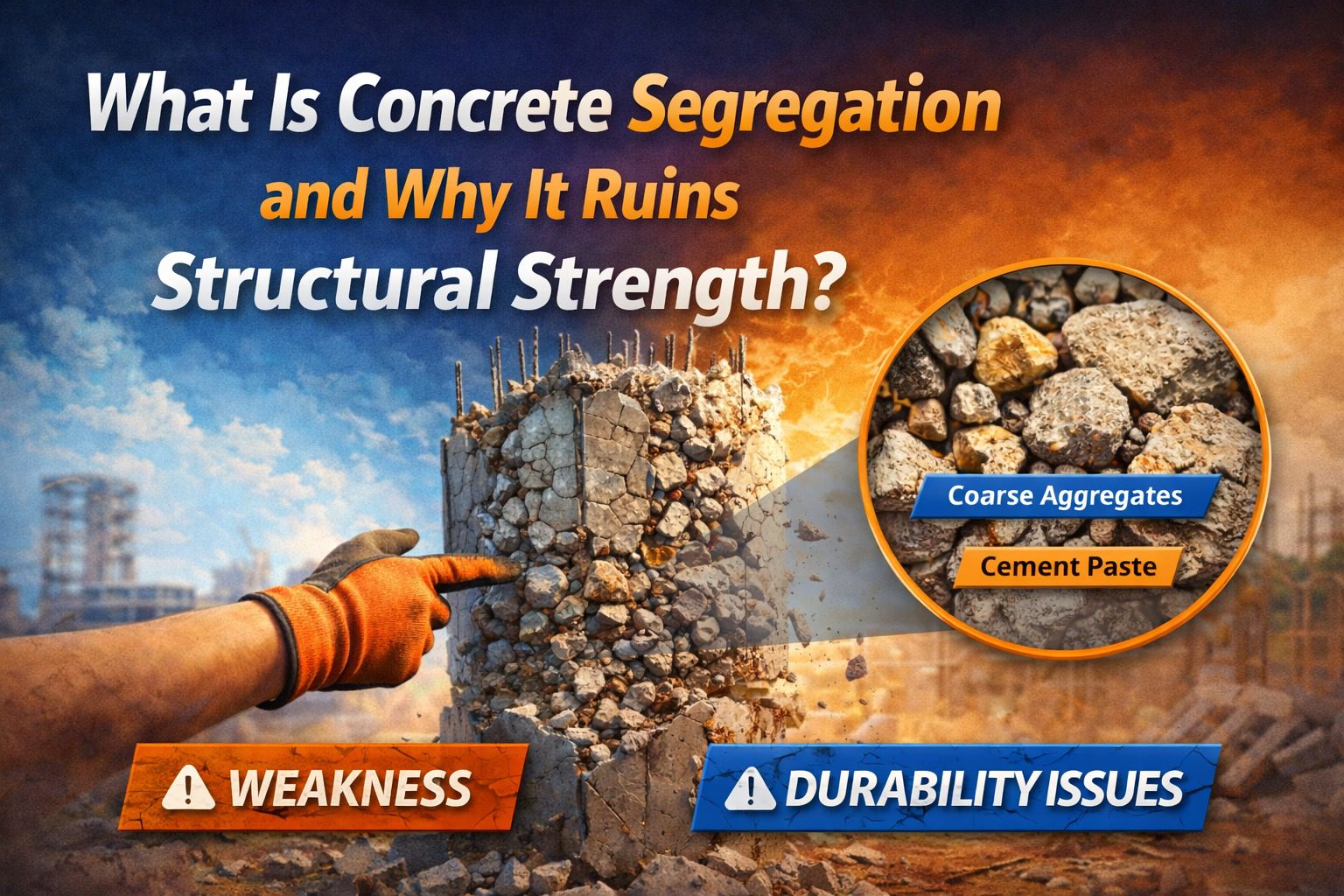
Concrete may look simple. However, its strength depends on balance. When that balance fails, concrete segregation in the UK becomes a serious concern. In simple terms, concrete mix separation leads to uneven material. As a result, poor concrete quality issues begin to appear. Over time, these turn into major structural concrete problems.
Therefore, understanding this issue is vital for both small and large projects. Whether you are building a driveway or a foundation, the risk stays the same. In many cases, hidden defects start early. Yet, they only show damage later.
What Is Concrete Segregation In Simple Terms?
Concrete segregation means the mix splits into parts. In other words, heavy aggregates move away from the cement paste. Meanwhile, water and fine particles rise to the top.
As a result, the mix loses its uniform nature. This form of concrete mix separation often happens during handling. For example, it may occur while mixing, moving, or placing the material.
Key Points:
- Coarse aggregates settle at the bottom
- Cement paste and water move upward
- The mix becomes uneven and weak
Therefore, this imbalance creates poor concrete quality issues from the start. Over time, the structure cannot perform as expected.
Why Does Concrete Segregation Happen?
Concrete needs proper control at every stage. However, small mistakes can lead to concrete segregation in the UK. In most cases, the issue begins before placement.
Common Causes:
- Excess Water In The Mix: When water content is too high, the mix becomes loose. As a result, aggregates settle quickly, causing concrete mix separation.
- Improper Transport: During transport, constant movement can disturb the mix. Therefore, shaking and jolting create early ready mix defects.
- Dropping From Height: If concrete is poured from a high level, heavier particles fall faster. Consequently, separation occurs before placement.
- Over-Vibration On Site: Vibration helps in compaction. However, too much vibration breaks the mix balance. This leads to visible poor concrete quality issues.
- Weak Mix Design: If the ratio of materials is incorrect, the mix lacks stability. As a result, structural concrete problems begin even before curing.
How Concrete Mix Separation Leads To Structural Concrete Problems
Concrete must act as one solid mass. However, concrete mix separation breaks this unity. As a result, different parts of the structure behave differently.
What Happens Inside The Structure:
- Loss of Bonding Strength: When aggregates separate, the bond weakens. Therefore, the structure cannot handle loads well.
- Uneven Load Distribution: Some areas become dense, while others stay weak. As a result, structural concrete problems develop under pressure.
- Reduced Compressive Strength: Strength depends on uniformity. However, segregation reduces that uniformity, leading to early failure risks.
In many projects, these issues remain hidden. Yet, they slowly reduce durability.
What Are The Visible Signs Of Segregated Concrete?
Although some defects stay hidden, many signs appear on the surface. Therefore, early inspection is important.
Common Signs To Look For:
- Honeycombing: Voids appear where aggregates are missing. As a result, the surface looks rough and weak.
- Air Voids and Gaps: Empty spaces reduce strength. Therefore, these gaps increase the risk of cracks.
- Surface Laitance: A weak, powdery layer forms on top. As a result, bonding between layers becomes poor.
- Uneven Finish: The surface may look patchy or inconsistent. This clearly shows poor concrete quality issues.
How Does Segregation Affect Strength And Durability?
Concrete must resist load and weather. However, concrete segregation in the UK reduces both strength and life.
Key Impacts:
- Lower Load-Bearing Capacity: Weak zones fail under stress. Therefore, the structure becomes unsafe over time.
- Higher Water Absorption: Voids allow water to enter. As a result, durability drops significantly.
- Increased Cracking Risk: Uneven areas expand differently. This leads to cracks and long-term structural concrete problems.
Why Proper Supply And Handling Matter
Quality does not depend only on materials. Instead, handling and delivery also play a key role. Therefore, choosing the right supplier is important.
Mighty Concrete is a trusted local supplier serving major areas across the UK, including Reading, Ruislip, Slough, Southampton, Staines, and Swindon. They focus on controlled mixing and careful delivery. As a result, the risk of ready mix defects stays low.
Moreover, proper transport reduces early concrete mix separation. This ensures the mix reaches your site in the right condition.
How To Prevent Concrete Segregation And Ready Mix Defects
Concrete needs care at every stage. Therefore, preventing concrete segregation in the UK starts with simple steps. When done right, you can avoid most ready mix defects and long-term damage.
Practical Prevention Methods:
- Use A Balanced Mix Design: First, ensure the ratio of cement, water, and aggregates is correct. A stable mix reduces concrete mix separation.
- Control Water Content: Too much water weakens the mix. Instead, keep the water level within limits to avoid poor concrete quality issues.
- Place Concrete Carefully: Avoid dropping concrete from a height. Rather, place it close to the surface to maintain uniformity.
- Apply Proper Vibration: Vibration helps remove air. However, controlled use is key. Overuse can lead to structural concrete problems.
- Ensure Smooth Transport: Gentle handling prevents early separation. As a result, the mix stays consistent until placement.
Why Choosing The Right Supplier Matters
Concrete quality starts before it reaches your site. Therefore, supplier choice directly affects the final result. Reliable delivery reduces the risk of concrete mix separation and other poor concrete quality issues.
Mighty Concrete supplies affordable and reliable concrete with same-day and next-day delivery options. Serving Reading, Ruislip, Slough, Southampton, Staines, and Swindon, as well as nearby areas, they ensure consistent quality across projects.
Moreover, their controlled batching and transport methods reduce ready mix defects. As a result, the mix arrives in proper condition, ready for use.
In addition, working with a trusted supplier helps avoid hidden structural concrete problems. This gives peace of mind for both small and large builds.
Build Stronger Structures With Reliable Concrete Supply
Concrete strength depends on consistency. However, concrete segregation in the UK continues to affect many projects. Over time, concrete mix separation leads to weak zones, surface defects, and serious structural concrete problems.
Therefore, choosing the right approach matters. By using proper methods and avoiding poor concrete quality issues, you protect your structure from early damage.
Mighty Concrete supports projects with dependable service and high-quality supply. For reliable concrete and expert support, call 01753 900 066 or connect via WhatsApp today.
FAQs –
1. What Causes Concrete Segregation On Site?
Concrete segregation often starts with excess water or poor handling. In addition, dropping from height or over-vibration can create concrete mix separation during placement.
2. Can Segregated Concrete Be Fixed?
Minor surface issues may be repaired. However, deep segregation leads to structural concrete problems. In such cases, replacement is often required.
3. How Can I Identify Poor Concrete Quality Issues Early?
Look for honeycombing, uneven texture, or weak surfaces. These signs usually indicate poor concrete quality issues caused by separation.
4. Does Ready Mix Concrete Reduce Segregation Risk?
Yes, ready mix can reduce risk when handled properly. However, poor transport or placement can still cause ready mix defects if not managed well.