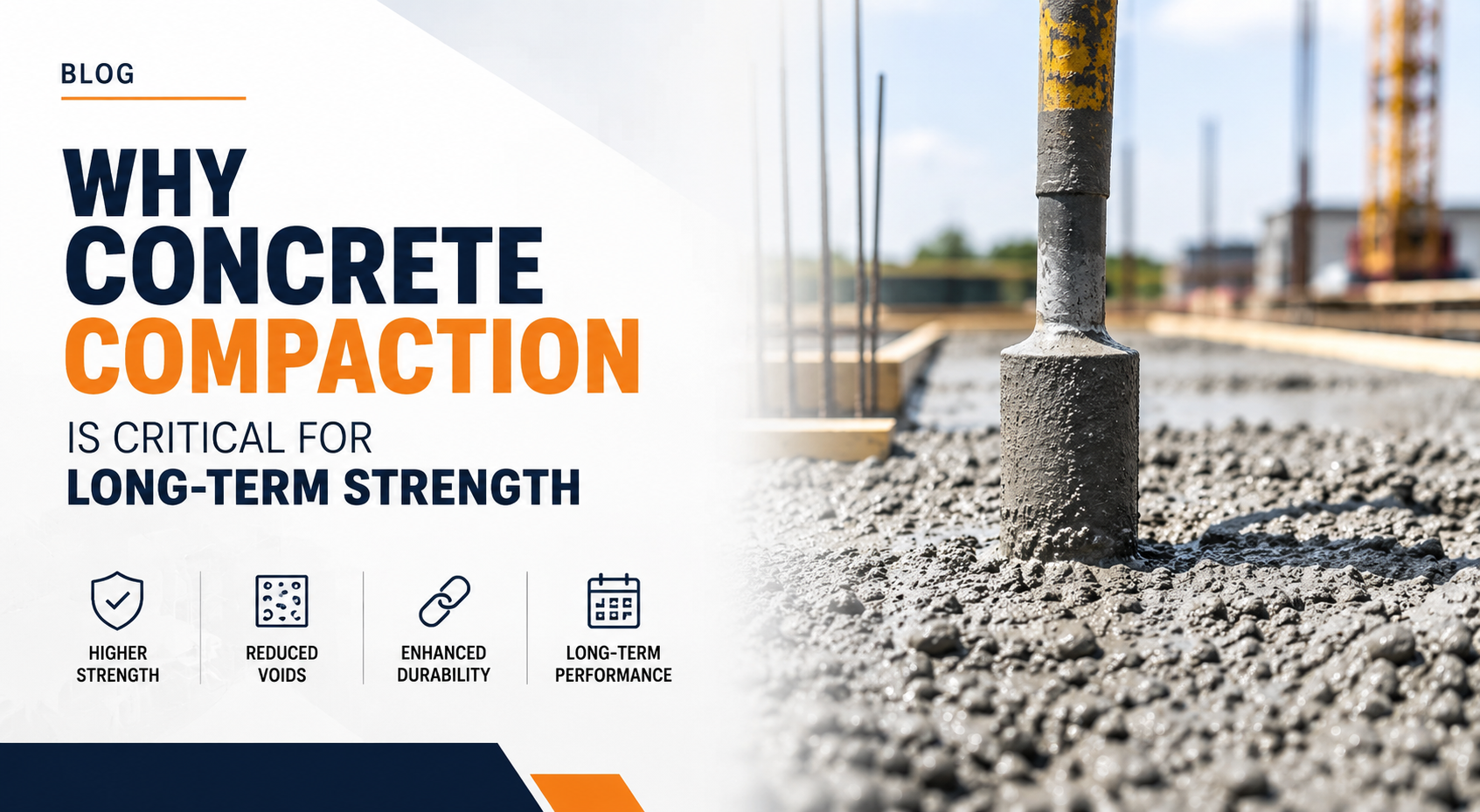
Concrete compaction in the UK is one of the most important stages during concrete pouring. It removes trapped air and helps create a dense and durable structure. In addition, proper vibrating concrete methods improve strength and reduce the risk of voids in concrete. This process also supports long-term structural durability across foundations, slabs, and reinforced concrete work.
Without proper compaction, concrete can become weak, porous, and more likely to crack over time. Therefore, contractors across the UK focus heavily on concrete strength improvement during the pouring stage. On both domestic and commercial projects, proper compaction helps concrete perform better under load and harsh weather conditions.
As a result, well-compacted concrete lasts longer and requires fewer repairs.
What Is Concrete Compaction And Why Is It Important?
Concrete compaction is the process of removing trapped air from freshly poured concrete. Usually, this is done through vibrating concrete methods that force air bubbles out of the mix. As a result, the concrete becomes denser and stronger.
During pouring, small air pockets naturally form inside the mix. However, if these pockets remain trapped, they create voids in concrete that weaken the structure. Therefore, proper compaction is essential for long-term performance.
In most UK construction projects, compaction helps concrete settle properly around reinforcement bars and within formwork. This creates a more solid and uniform structure.
Key Benefits Of Concrete Compaction In The UK Include:
- Higher Concrete Density: Removing trapped air creates a tighter and stronger concrete mass. Therefore, the structure handles loads more effectively.
- Better Concrete Strength Improvement: Proper compaction can significantly increase compressive strength by reducing internal weak points.
- Reduced Air Voids: Fewer air pockets lower the risk of future cracking and moisture penetration.
- Improved Structural Durability: Dense concrete resists water damage, freeze-thaw cycles, and reinforcement corrosion more effectively.
Furthermore, poor compaction often leads to costly structural problems later in the project lifecycle.
How Do Voids In Concrete Affect Structural Strength?
Voids in concrete are empty spaces caused by trapped air during pouring. These gaps reduce density and create weak areas inside the structure. Therefore, even small air pockets can affect long-term strength.
In practical construction work, poorly compacted concrete often develops honeycombing. This problem leaves visible gaps around aggregates and reinforcement bars. As a result, the concrete becomes weaker and less durable.
Common Problems Caused By Voids In Concrete:
- Reduced Load-Bearing Capacity: Air pockets weaken the internal structure. Therefore, the concrete cannot carry weight as effectively.
- Water Penetration Risks: Gaps allow moisture to move through the concrete more easily. As a result, reinforcement corrosion becomes more likely.
- Lower Structural Durability: Porous concrete deteriorates more quickly in UK weather conditions, especially during freeze-thaw cycles.
- Weak Reinforcement Bonding: Concrete may not fully surround steel reinforcement. Therefore, structural stability reduces over time.
- Surface Honeycombing: Visible gaps and rough surfaces affect both appearance and structural performance.
Moreover, studies across the construction industry show that just 5% trapped air can reduce concrete strength significantly. Therefore, concrete compaction in the UK remains a critical part of quality concrete installation.
Why Is Vibrating Concrete Common On UK Construction Sites?
Vibrating concrete is the most common compaction method used on UK building sites. It removes trapped air quickly while helping the mix settle evenly throughout the formwork.
Usually, contractors use internal poker vibrators for foundations, columns, and reinforced slabs. In addition, surface vibrators and screeds are used on shallow pours and paving projects.
Common Vibrating Concrete Methods Include:
- Poker Vibrators: Inserted directly into wet concrete to remove trapped air and improve density.
- Surface Vibrators: Commonly used on slabs and paving surfaces to level and compact the top layer.
- Vibrating Tables: Often used for precast concrete products where uniform compaction is required.
In most cases, proper vibration improves concrete strength while reducing the risk of voids in concrete. As a result, the finished structure becomes stronger, denser, and more reliable.
How Does Proper Compaction Improve Structural Durability?
Proper concrete compaction in the UK plays a major role in improving long-term structural durability. Dense concrete absorbs less water and resists damage more effectively over time.
When trapped air is removed, the concrete forms a tighter bond around aggregates and reinforcement bars. Therefore, the structure becomes stronger and more stable.
Key Ways Compaction Improves Structural Durability Include:
- Lower Water Penetration: Dense concrete reduces moisture movement through the structure. As a result, reinforcement corrosion risks stay lower.
- Better Freeze-Thaw Resistance: In UK weather, trapped moisture can freeze and expand. However, properly compacted concrete reduces internal damage during temperature changes.
- Stronger Reinforcement Bonding: Concrete fully surrounds steel reinforcement during proper compaction. Therefore, the structure gains better load support and long-term stability.
- Reduced Shrinkage Cracking: Fewer air pockets help minimise movement inside the concrete. As a result, surface cracking becomes less likely.
- Improved Surface Finish: Properly compacted concrete creates a smoother and more uniform finish. Therefore, fewer repairs are needed after curing.
In practical terms, good compaction improves both structural performance and service life across domestic and commercial projects.
What Happens When Concrete Is Poorly Compacted?
Poor compaction creates weak concrete with lower density and reduced durability. Therefore, structures may deteriorate much faster than expected.
When air remains trapped inside the mix, voids in concrete form around aggregates and reinforcement bars. As a result, the concrete develops weak internal sections that affect long-term strength.
Common Problems Caused By Poor Compaction Include:
- Honeycombing: Large visible gaps appear inside the concrete structure. Therefore, load-bearing performance becomes weaker.
- Water Leakage: Porous concrete allows moisture to pass through more easily. As a result, dampness and reinforcement corrosion may develop.
- Lower Structural Durability: Weak concrete deteriorates faster under regular use and changing weather conditions.
- Reduced Concrete Strength Improvement: Poor compaction limits density and prevents the concrete from reaching full strength potential.
- Premature Structural Damage: Weak internal bonding may lead to cracking, surface failure, or costly repairs earlier than expected.
Across UK construction sites, poor compaction remains one of the leading causes of avoidable concrete defects. Therefore, proper site handling and vibration methods are essential during every pour.
Best Practices For Concrete Strength Improvement During Pouring
Achieving reliable concrete strength improvement depends heavily on correct compaction methods during placement. Therefore, contractors should follow consistent procedures throughout the pouring process.
In most cases, proper timing and controlled vibration produce the best results. At the same time, excessive vibration should also be avoided, as overworking the mix may cause segregation.
Best Practices For Concrete Compaction In The UK:
- Use The Correct Vibrator Type: Different pours require different tools. Therefore, poker vibrators, screeds, or surface vibrators should match the project type.
- Compact Concrete In Layers: Thick pours should be compacted in stages. As a result, trapped air is removed more evenly.
- Avoid Over-Vibration: Excessive vibration may separate aggregates from the cement paste. Therefore, balanced compaction is important.
- Monitor Pour Consistency: Consistent concrete flow improves compaction performance and reduces air pockets.
- Work Quickly During Placement: Delays during pouring may affect concrete settlement and final density.
Furthermore, experienced site teams understand how proper vibrating concrete techniques improve both strength and finish quality.
Reliable Concrete Supply Across Key UK Areas
Across Reading, Ruislip, Slough, Southampton, Staines, and Swindon, construction projects depend on reliable concrete supply and efficient site coordination. Therefore, choosing the right supplier supports better project performance from the start.
Mighty Concrete provides same day and next-day delivery services across these areas and nearby locations. In addition, the company supplies affordable and reliable concrete for domestic, commercial, and groundwork projects.
Serving Reading, Ruislip, Slough, Southampton, Staines, and Swindon, Mighty Concrete supports projects that require consistent concrete quality for effective compaction and long-term structural durability. As a result, contractors receive dependable material supply that supports smoother pouring and better site efficiency.
Moreover, reliable concrete consistency plays an important role in reducing voids in concrete and improving overall compaction results.
Ensure Every Pour Is Properly Compacted For Maximum Strength
Proper concrete compaction in the UK is essential for achieving long-lasting structural performance. When trapped air is removed correctly, concrete becomes denser, stronger, and more resistant to damage. In addition, effective vibrating concrete methods help improve bonding, reduce moisture penetration, and support long-term structural durability.
Whether you are working on foundations, slabs, reinforced concrete, or commercial structures, good compaction directly supports concrete strength improvement and reduces the risk of voids in concrete. Therefore, correct site handling during every pour is critical for safe and reliable construction work.
Mighty Concrete supports projects across Reading, Ruislip, Slough, Southampton, Staines, and Swindon with reliable concrete supply and dependable service.
Call or WhatsApp 01753 900066 to ensure every pour is properly compacted for maximum strength.
FAQs
-
Why Is Concrete Compaction Important?
Concrete compaction removes trapped air from freshly poured concrete. As a result, the structure becomes denser, stronger, and more durable over time. -
What Causes Voids In Concrete?
Voids usually form when trapped air remains inside the mix during pouring. Poor vibration and incorrect placement methods often increase this risk.
-
Can Poor Compaction Weaken Reinforced Concrete?
Yes, poor compaction prevents concrete from bonding properly around reinforcement bars. Therefore, structural stability and durability may be reduced significantly.
-
What Equipment Is Used For Vibrating Concrete?
Common equipment includes poker vibrators, surface vibrators, screeds, and vibrating tables for precast concrete production.